water tank cleaning near me Bangalore
Water Tank Cleaning Near Me Bangalore: Professional Water Tank Cleaning Services for Clean and Hygienic Water
Clean water is essential for every household, apartment, office and commercial establishment. Whether you use stored water for drinking, cooking, bathing, washing or other daily activities, maintaining the cleanliness of your water storage tank is an important part of protecting water quality. However, many property owners focus only on the quality of the water supply and overlook the condition of the tank in which the water is stored.
Over time, water storage tanks can accumulate mud, dust, sand, silt, rust particles, algae and other unwanted deposits. These materials may enter through water supply lines, tank openings, damaged covers or surrounding environmental conditions. If the tank is not cleaned regularly, accumulated dirt and sludge can affect the condition of stored water and create an unhygienic storage environment.
This is why searching for water tank cleaning near me Bangalore is an important step for homeowners, apartment associations, property managers and business owners who want to maintain clean water storage facilities.
Professional water tank cleaning involves more than simply removing visible dirt. It includes draining the tank, removing accumulated sludge, cleaning internal surfaces, washing away deposits and carrying out appropriate sanitization. A systematic cleaning process helps maintain better water storage hygiene and reduces the possibility of contamination from deposits inside the tank.
At watertankcleaningbangalore.com, our focus is on helping property owners understand the importance of maintaining clean and hygienic water storage systems. Whether it is an overhead tank in an individual house, an underground tank in an apartment complex or a large storage tank in a commercial building, proper cleaning and maintenance should never be overlooked.
This guide explains the importance of water tank cleaning, common signs that indicate cleaning is required, professional cleaning methods, the difference between overhead and underground tank cleaning, recommended cleaning intervals and how to choose a suitable water tank cleaning service in Bangalore.
Why Is Water Tank Cleaning Important in Bangalore?
Bangalore is a rapidly growing city with residential communities, independent houses, apartments, offices, commercial buildings and industrial establishments. Many properties depend on stored water to manage their daily requirements.
Water is commonly stored in overhead tanks, underground sumps and other storage systems before being distributed throughout a building. Although these tanks provide a convenient way to store water, they can collect impurities over time.
The condition of a water storage tank directly influences the cleanliness of the water stored inside it. Even when water initially enters the tank in good condition, dirt and deposits can accumulate inside the storage system.
Regular water tank cleaning helps address these concerns before excessive deposits develop.
1. Removal of Mud, Dust and Sediment
Water entering a storage tank may carry small quantities of suspended particles. These particles can settle at the bottom when water remains undisturbed for extended periods.
Common deposits include:
-
Mud and fine soil particles.
-
Sand and dust.
-
Silt and sediment.
-
Rust particles from plumbing components.
-
Other suspended impurities.
As these materials accumulate, they form a layer of sludge at the bottom of the tank. Professional cleaning removes this deposited material and helps maintain a cleaner storage environment.
2. Prevention of Algae Formation
Algae can develop in water storage tanks when suitable conditions are present. Light entering through transparent tank covers, loose fittings or damaged openings may contribute to algae growth.
Algae can make the tank interior slippery and may affect the appearance and condition of stored water.
Cleaning the internal surfaces and ensuring that the tank is properly covered can help reduce the conditions that encourage algae growth.
3. Better Water Storage Hygiene
A clean tank provides a more hygienic environment for storing water. Removing accumulated sludge, dirt and unwanted deposits helps maintain the cleanliness of the storage system.
Tank cleaning is particularly important in apartments, hospitals, schools, offices and commercial buildings where stored water supports the daily requirements of multiple occupants.
4. Reduction of Unpleasant Smell and Appearance Issues
Water stored in a poorly maintained tank may sometimes develop an unusual smell, colour or visible particles.
These changes can have different causes, including sediment accumulation, organic material, corrosion or problems in the incoming water supply.
Cleaning the tank helps remove internal deposits that may contribute to these issues. However, if unusual water quality continues after cleaning, the incoming water supply and plumbing system should also be investigated.
5. Improved Tank Maintenance
Regular inspection and cleaning help identify maintenance concerns such as cracks, damaged covers, loose fittings, corrosion and water leakage.
Identifying these issues early allows property owners to arrange suitable repairs and maintain the storage system more effectively.
What Happens When You Do Not Clean Your Water Tank Regularly?
Many property owners assume that a closed water tank does not require frequent cleaning. However, even covered storage tanks can accumulate sediment and unwanted deposits.
When cleaning is neglected, several problems may develop over time.
Accumulation of Sludge at the Bottom
Mud, sand and other suspended particles gradually settle at the bottom of a water tank.
As the quantity of sediment increases, it forms a layer of sludge. During water movement or refilling, some of these deposits may become disturbed and mix with the stored water.
This can make the water appear cloudy or contain visible particles.
Development of Algae and Biofilm
Algae and biofilm can develop on internal surfaces when environmental conditions support their growth.
These deposits may appear as green, brown or slippery layers on the tank walls and bottom.
Apart from affecting tank cleanliness, biofilm can make routine maintenance more difficult if it is allowed to accumulate for long periods.
Unpleasant Water Odour
An unusual smell from stored water can indicate a problem with the storage tank, incoming supply or plumbing system.
Accumulated organic material and microbial growth may contribute to unpleasant odours.
Cleaning can help remove deposits inside the tank, but persistent odour should be investigated rather than treated as a cleaning issue alone.
Increased Maintenance Requirements
When a tank remains uncleaned for an extended period, deposits may become more difficult to remove.
Thick sludge, hardened dirt and extensive surface deposits can require additional cleaning effort.
Regular maintenance helps prevent excessive accumulation and makes future cleaning more manageable.
Possible Contamination Concerns
An improperly maintained tank can become vulnerable to contamination, especially when its cover is damaged or openings are not properly protected.
Birds, insects, rodents, dust and other external materials may enter through uncovered openings.
Maintaining a properly sealed and clean tank is an important precaution for protecting stored water.
Professional Water Tank Cleaning Near Me Bangalore: What Does the Service Include?
When searching for water tank cleaning services in Bangalore, it is important to understand what a professional cleaning process should involve.
A proper service should address the condition of the entire storage tank rather than simply removing visible dirt from the bottom.
The cleaning procedure may vary depending on the tank's size, construction, accessibility, water condition and type of storage system.
1. Initial Tank Inspection
The first step is to inspect the tank and understand its condition.
The inspection helps identify:
-
Tank capacity and dimensions.
-
Type of tank construction.
-
Amount of accumulated sludge.
-
Visible algae or surface deposits.
-
Condition of the tank cover.
-
Accessibility for cleaning.
-
Possible leakage or structural concerns.
This assessment helps determine the appropriate cleaning procedure.
2. Draining the Stored Water
Before internal cleaning begins, the stored water is drained or removed using a suitable method.
For some storage systems, the water may be transferred or pumped out depending on the available arrangements.
Proper draining allows cleaning personnel to access the tank floor and internal walls.
3. Sludge and Sediment Removal
Once the tank is sufficiently drained, accumulated mud, sand, silt and sludge are removed.
This is an important stage because sediment at the bottom can become disturbed during refilling and affect the cleanliness of stored water.
Suitable equipment and cleaning methods are selected according to the tank's dimensions and condition.
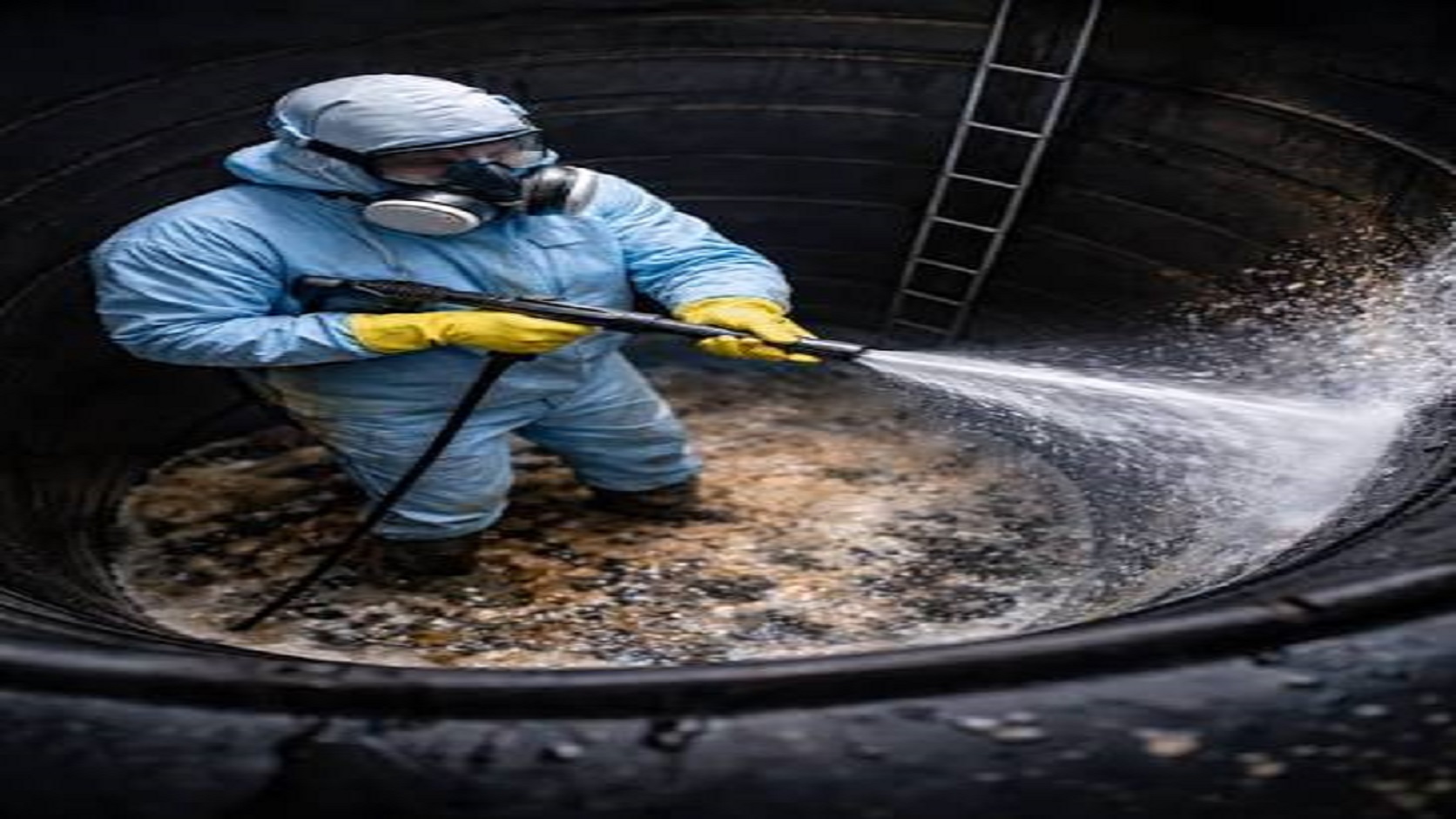
4. Internal Wall and Floor Cleaning
The internal surfaces of the tank are cleaned to remove dirt, algae, biofilm and other deposits.
Depending on the tank material and condition, appropriate brushes, cleaning equipment or pressure-based methods may be used.
Care should be taken to avoid damaging the tank's internal surface, protective coating or waterproofing layer.
5. Rinsing and Removal of Cleaning Residue
After scrubbing and removing deposits, the tank is rinsed to clear loosened dirt and cleaning residue.
The objective is to leave the internal surfaces free from visible deposits and unwanted cleaning materials.
6. Appropriate Sanitization
Sanitization is an important part of maintaining hygienic water storage.
A suitable sanitizing method may be used according to the tank material, water storage purpose and applicable safety guidance.
The product, concentration and contact time must be appropriate for potable-water storage systems.
Household cleaning chemicals should never be used indiscriminately inside drinking-water tanks.
7. Final Inspection and Refilling
After cleaning and sanitization, the tank should be checked before it is returned to normal use.
The inspection should confirm that:
-
Visible sludge has been removed.
-
Internal surfaces have been properly cleaned.
-
Cleaning residues have been removed.
-
The tank is suitable for refilling.
-
The cover and openings are properly secured.
The tank can then be refilled with water from the available supply.
Important: Cleaning and sanitization help maintain tank hygiene, but they do not independently certify that water is safe for drinking. Where drinking-water safety is a concern, appropriate water-quality testing is recommended.
Types of Water Tank Cleaning Services in Bangalore
Different properties use different types of water storage systems. An independent house may have a small overhead tank, while an apartment complex may depend on multiple underground sumps and large overhead tanks.
Each storage system requires a cleaning approach that considers its construction, capacity, accessibility and level of contamination.
1. Overhead Water Tank Cleaning
Overhead water tanks are commonly installed on rooftops and terraces of residential buildings, apartments and commercial properties.
These tanks store water that is distributed to bathrooms, kitchens and other outlets through gravity or pumping systems.
Overhead tanks can collect dust, sediment, algae and other deposits over time, particularly when covers are damaged or improperly fitted.
Professional overhead water tank cleaning generally involves:
-
Draining the stored water.
-
Removing accumulated sludge and sediment.
-
Scrubbing the tank walls and bottom.
-
Cleaning internal corners and difficult-to-reach areas.
-
Rinsing the tank thoroughly.
-
Applying appropriate sanitization.
-
Checking the tank cover and inlet openings.
Regular overhead tank maintenance helps maintain a cleaner water storage environment and reduces the accumulation of unwanted deposits.
2. Underground Water Tank Cleaning
Underground water tanks, commonly known as sumps, are widely used in Bangalore residential properties, apartment complexes, commercial buildings and institutions.
These tanks usually receive water from external supply sources and store it before pumping it to overhead tanks.
Because underground sumps are located below ground level, they may require special attention during inspection and cleaning.
Common cleaning requirements include:
-
Removing accumulated mud and sand.
-
Clearing sludge from the tank floor.
-
Cleaning internal walls.
-
Removing algae and surface deposits.
-
Rinsing the storage area.
-
Carrying out suitable sanitization.
-
Inspecting accessible internal surfaces.
Underground tank cleaning requires particular care because entry into a confined space can present serious safety risks. Workers should not enter a sump without appropriate confined-space assessment, atmospheric testing, ventilation, isolation of connected equipment and suitable safety procedures.
3. Residential Water Tank Cleaning
Residential water tank cleaning is suitable for individual houses, villas, independent homes and small residential properties.
Many homeowners use separate underground and overhead tanks to manage their daily water requirements.
Both storage systems should be maintained because cleaning only the overhead tank while ignoring a contaminated sump may not address the overall storage hygiene problem.
Residential tank cleaning typically focuses on removing accumulated dirt, cleaning internal surfaces and maintaining suitable storage conditions.
Homeowners should also ensure that tank lids are properly fitted and that inlet and outlet connections are maintained.
4. Apartment Water Tank Cleaning
Apartment complexes often depend on shared underground sumps and multiple overhead tanks.
These storage systems serve several families and may supply water to dozens or hundreds of residential units.
Therefore, apartment water tank cleaning requires proper coordination between cleaning personnel, apartment associations, facility managers and residents.
Important considerations include:
-
Identifying all storage tanks within the property.
-
Understanding the water distribution arrangement.
-
Planning cleaning without unnecessary disruption.
-
Informing residents about the scheduled work.
-
Cleaning underground and overhead tanks.
-
Ensuring that all connected storage sections are addressed.
-
Checking covers, access points and visible defects.
-
Coordinating refilling after the cleaning process.
Apartment associations should maintain records of previous cleaning dates and arrange inspections at suitable intervals.
5. Commercial Water Tank Cleaning
Commercial establishments such as offices, shopping complexes, hotels, restaurants, warehouses and business centres depend on reliable water storage systems.
The water may be used for washrooms, housekeeping, kitchens, cleaning activities and other operational requirements.
Poor tank maintenance can create unnecessary hygiene concerns and interrupt normal building operations.
Commercial water tank cleaning should be planned according to the property's water usage, storage capacity and operational schedule.
A suitable maintenance arrangement helps building managers keep track of cleaning activities and maintain cleaner storage facilities.
6. Industrial Water Tank Cleaning
Industrial facilities may use large storage tanks for process water, utility requirements, cleaning operations and other purposes.
The cleaning method depends on the intended use of the stored water, tank material, industrial processes and the type of deposits present.
Industrial water storage systems may require specialised inspection, equipment and cleaning procedures.
Where tanks contain chemicals, process residues or non-potable water, a separate risk assessment and suitable industrial cleaning procedure are necessary.
Signs That Your Water Tank Needs Professional Cleaning
One of the most common mistakes property owners make is waiting until the water becomes visibly dirty before arranging tank cleaning.
However, deposits can accumulate inside a tank even when the water coming from the taps appears normal.
Knowing the warning signs helps property owners identify when maintenance may be necessary.
1. Muddy or Cloudy Water
If water appears cloudy, brownish or contains suspended particles, sediment accumulation may be one possible cause.
The issue may also originate from the incoming supply, corroded pipes or plumbing disturbances.
Checking the tank and supply system can help identify the source.
2. Unpleasant Smell
An unusual smell from stored water should not be ignored.
It may be associated with organic deposits, microbial growth, contamination or problems in the supply line.
If the smell continues after tank cleaning, further investigation and water-quality testing may be necessary.
3. Green or Brown Deposits Inside the Tank
Green deposits may indicate algae growth, while brown or dark deposits may be associated with accumulated sediment, corrosion or other materials.
These deposits should be removed using suitable cleaning methods.
4. Slippery Internal Tank Walls
A slippery coating on the tank's internal surface may indicate biofilm formation.
This layer can develop when microorganisms and organic materials accumulate on wet surfaces.
Appropriate cleaning and sanitization help address these deposits.
5. Visible Dirt at the Bottom of the Tank
If inspection reveals mud, sand or sludge at the bottom, the tank requires attention.
Even when the stored water appears clear, sediment accumulation is a reason to arrange cleaning.
6. Insects or Other External Contaminants
Openings, damaged lids and poorly sealed access points can allow insects, birds and other unwanted materials to enter a storage tank.
The tank should be inspected, cleaned if necessary and properly secured.
7. Long Periods Without Cleaning
A tank that has not been cleaned for an extended period should be inspected, even if there are no obvious signs of contamination.
The absence of visible dirt does not necessarily mean that internal surfaces are clean.
How Often Should You Clean Your Water Tank in Bangalore?
There is no single cleaning interval that is suitable for every property. The recommended frequency depends on water quality, tank capacity, storage conditions, usage and maintenance history.
For many residential and commercial properties, cleaning approximately every six months is a practical maintenance starting point. However, more frequent cleaning may be necessary when water contains high levels of sediment or when contamination is suspected.
The following factors should be considered.
Water Supply Quality
Properties receiving water with higher levels of suspended sediment may experience faster accumulation of deposits.
The condition of the incoming supply should be considered when deciding how frequently to clean the tank.
Tank Capacity
Small tanks and large storage systems can collect different quantities of sediment depending on their usage and water turnover.
Larger tanks may require more planning, but capacity alone does not determine the cleaning frequency.
Tank Location
Overhead tanks exposed to sunlight, damaged covers or surrounding dust may experience different maintenance requirements compared with properly enclosed underground storage tanks.
Number of Occupants
A house occupied by a small family may have different water usage patterns compared with an apartment building serving hundreds of residents.
Higher water consumption can influence how frequently a storage system is refilled and how sediment behaves inside it.
Previous Maintenance History
A tank that has been regularly inspected and cleaned may require a different maintenance schedule from one that has remained neglected for several years.
Recommended Cleaning Schedule
|
Property Type |
Suggested Inspection and Cleaning Planning |
|---|---|
|
Individual houses |
Approximately every 6 months |
|
Apartments |
Approximately every 6 months, with periodic inspection |
|
Offices |
Based on usage and water storage conditions |
|
Commercial buildings |
Based on storage capacity and maintenance requirements |
|
Schools and institutions |
Regularly scheduled inspections and cleaning |
|
Industrial facilities |
According to water usage and operational requirements |
These are general maintenance recommendations, not a substitute for a site-specific assessment. Tanks should be inspected more frequently if there are visible deposits, unusual odours, suspected contamination or changes in water quality.
Water Tank Cleaning Methods: Traditional Cleaning vs Professional Cleaning
Property owners sometimes consider cleaning their water tanks themselves to reduce maintenance costs. While basic inspection and external maintenance can be managed by property staff, internal cleaning requires proper equipment, cleaning procedures and safety precautions.
Understanding the differences can help when choosing a suitable service.
Traditional Manual Water Tank Cleaning
Traditional cleaning generally involves manually draining the tank, removing sludge and scrubbing internal surfaces.
The quality of the result depends on the cleaning method, equipment and attention given to difficult-to-reach areas.
Potential limitations include:
-
Incomplete sludge removal.
-
Difficulty cleaning corners and joints.
-
Inadequate rinsing.
-
Improper use of cleaning chemicals.
-
Limited safety arrangements.
-
Lack of consistent cleaning documentation.
Manual cleaning is not necessarily ineffective. However, it must be carried out properly to achieve satisfactory results.
Professional Water Tank Cleaning
Professional cleaning uses suitable tools and a planned procedure to address the different areas of the storage tank.
Depending on the property and tank condition, the process may involve specialised pumps, cleaning equipment, brushes, controlled pressure washing and appropriate sanitization.
The advantages include:
-
Systematic cleaning procedures.
-
Better removal of accumulated sludge.
-
Attention to internal walls and corners.
-
Suitable equipment for different tank types.
-
Appropriate sanitization procedures.
-
Better coordination for large storage systems.
-
Opportunity to identify visible maintenance issues.
Professional cleaning is particularly useful for apartment complexes, commercial properties and large underground sumps where cleaning involves multiple storage sections.
What Equipment Is Used for Professional Water Tank Cleaning?
The equipment required depends on the tank's construction, dimensions, accessibility and condition.
Using the correct tools is important because different tank materials require different cleaning approaches.
Sludge Removal Pumps
Sludge removal pumps help remove accumulated water, sediment and loose deposits from the bottom of storage tanks.
They are particularly useful when cleaning large underground sumps.
Industrial Vacuum Equipment
Suitable wet vacuum equipment may be used to collect sludge and water from difficult-to-reach sections.
The equipment should be appropriate for the type of material being removed.
Scrubbing Brushes
Different types of brushes help remove dirt and surface deposits from tank walls and floors.
Brush selection should consider whether the tank is made of plastic, concrete, metal or another material.
Pressure Washing Equipment
Pressure washing can help remove stubborn deposits from suitable tank surfaces.
However, pressure must be controlled according to the tank material and condition. Excessive pressure can damage coatings, joints or waterproofing layers.
Sanitization Equipment
Suitable equipment may be used to apply an approved sanitizing solution in a controlled manner.
The sanitizing procedure should follow the product instructions and applicable potable-water safety guidance.
Personal Protective Equipment
Cleaning personnel may require gloves, protective footwear, eye protection, suitable clothing and respiratory protection depending on the task.
Confined-space entry requires additional specialised safety arrangements and must never be treated as an ordinary cleaning activity.
Water Tank Cleaning for Different Tank Materials
Not every water storage tank can be cleaned using the same method. Tank material influences the type of tools, cleaning products and pressure that can be used.
Plastic Water Tanks
Plastic tanks are common in residential houses and apartments.
They are generally lightweight and available in different capacities.
Cleaning should use suitable non-abrasive tools that do not scratch or damage the internal surface.
Harsh chemicals and excessive pressure should be avoided.
Concrete Water Tanks
Concrete tanks are commonly used as underground sumps and large-capacity storage systems.
Their internal surfaces may collect sediment, mineral deposits and other materials.
Cleaning may require specialised equipment to remove accumulated sludge from the floor and walls.
The inspection should also consider cracks, damaged waterproofing and possible seepage.
Stainless Steel Water Tanks
Stainless steel tanks are used in some residential, commercial and institutional applications.
Cleaning methods should be compatible with the stainless steel surface to avoid scratching or corrosion.
The choice of cleaning materials is particularly important.
Metal Water Tanks
Older metal storage tanks may develop rust or corrosion.
Cleaning can remove loose deposits, but it cannot repair structural corrosion or damaged protective coatings.
Where rust is extensive, the tank should be assessed for repairs or replacement.
Why Bangalore Properties Need Regular Water Tank Maintenance
Bangalore has a wide variety of residential and commercial developments, ranging from independent houses to large apartment communities.
Different properties depend on different water supply arrangements, including municipal supply, borewell water and water delivered through tankers.
These supply arrangements can influence the type and quantity of deposits that enter storage systems.
Water from Multiple Supply Sources
Some properties receive water from more than one source.
For example, an apartment may use municipal water along with borewell or tanker-supplied water.
Different sources may contain different levels of suspended particles and dissolved minerals.
Regular tank inspection helps identify whether deposits are accumulating inside the storage system.
Borewell Water Storage
Borewell water may contain naturally occurring dissolved minerals and suspended materials, depending on the local groundwater conditions.
The presence of sediment can increase the need for periodic tank inspection and cleaning.
Where there are concerns about hardness, iron, dissolved solids or other water-quality parameters, appropriate testing should be arranged.
Tanker Water Storage
Some properties depend on tanker water during periods of supply shortage or increased demand.
Water quality can vary between suppliers and deliveries.
Checking the condition of storage tanks and maintaining proper covers are important precautions.
Apartment and Community Water Systems
Large residential communities often use multiple storage tanks and interconnected pumping arrangements.
If one tank is neglected, the overall storage maintenance programme may become inconsistent.
A planned cleaning schedule covering all relevant storage tanks helps apartment associations manage their facilities more effectively.
How to Choose the Best Water Tank Cleaning Services Near Me in Bangalore
When searching online for water tank cleaning near me Bangalore, you may come across several service providers offering different cleaning methods and pricing structures.
However, choosing a service should not depend only on the lowest quoted price. The quality of the cleaning process, equipment, safety arrangements and service transparency are equally important.
Here are some factors to consider before selecting a water tank cleaning company.
1. Check the Company's Cleaning Process
Ask the service provider to explain the cleaning procedure.
A professional cleaning process should address the following activities:
-
Removal of stored water where required.
-
Sludge and sediment removal.
-
Cleaning of tank walls and floors.
-
Removal of algae and visible deposits.
-
Proper rinsing.
-
Appropriate sanitization.
-
Final inspection.
A service that only removes water from the tank without cleaning the internal surfaces may not provide adequate maintenance.
2. Check Experience with Different Tank Types
Every storage system has different cleaning requirements.
A service provider should understand the cleaning requirements of:
-
Overhead plastic tanks.
-
Underground concrete sumps.
-
Residential water tanks.
-
Apartment storage systems.
-
Commercial storage tanks.
-
Large-capacity water storage systems.
Experience with different tank types helps ensure that the cleaning method is appropriate for the property.
3. Ask About Cleaning Equipment
Suitable equipment makes the cleaning process more systematic.
Depending on the tank, the service provider may use sludge removal pumps, brushes, wet vacuum equipment and suitable pressure-cleaning tools.
Ask whether the equipment is appropriate for your tank material and condition.
4. Understand the Sanitization Procedure
Sanitization should be carried out using products and procedures suitable for water storage systems.
Ask the company what sanitization method is used and whether the procedure follows the relevant safety instructions.
Avoid providers who cannot explain the products or cleaning chemicals being used.
5. Check Worker Safety Arrangements
Water tank cleaning can involve wet surfaces, electrical equipment, rooftop access and confined spaces.
Safety should be an essential part of the service.
For underground tanks, proper confined-space safety procedures are particularly important. These may include atmospheric testing, ventilation, isolation of connected equipment, suitable protective equipment and trained personnel.
6. Ask for Transparent Pricing
Before confirming the service, understand what is included in the quoted amount.
The price may depend on:
-
Tank capacity.
-
Tank type.
-
Number of tanks.
-
Amount of accumulated sludge.
-
Accessibility.
-
Cleaning complexity.
-
Required equipment.
-
Additional maintenance requirements.
Request a clear quotation rather than relying on a price that does not specify the work included.
7. Check Service Coverage in Your Area
Bangalore is a large city with residential and commercial properties spread across different localities.
Before booking, confirm whether the service provider covers your particular area.
You should also check the availability of cleaning appointments and whether multiple tanks can be cleaned during the same visit.
8. Look for Clear Communication
A reliable service provider should explain the process, expected work, water interruption requirements and necessary arrangements.
Clear communication helps residents, apartment associations and facility managers plan the cleaning activity without unnecessary confusion.
Water Tank Cleaning Cost in Bangalore: What Determines the Price?
One of the common questions property owners ask is how much professional water tank cleaning costs in Bangalore.
The cost depends on several factors, and there is no single price that applies to every property.
A small residential overhead tank generally requires a different amount of work compared with a large underground sump serving an apartment complex.
Understanding the factors that influence pricing helps property owners make informed decisions.
1. Tank Capacity
The capacity of the tank is one of the primary factors influencing cleaning requirements.
A larger tank generally requires more time, equipment and effort than a smaller tank.
For example, cleaning a small household storage tank is different from cleaning a large-capacity apartment sump.
2. Type of Water Tank
Overhead tanks and underground sumps have different accessibility and cleaning requirements.
Underground tanks may require additional equipment for removing sludge and water.
The cleaning method also depends on the tank's construction and internal condition.
3. Amount of Sludge and Dirt
A tank that has been cleaned regularly may contain relatively little sediment.
However, a neglected tank may contain thick sludge, hardened deposits and extensive surface contamination.
The amount of accumulated material can influence the time and effort required.
4. Number of Tanks
A property with multiple storage tanks may require a separate assessment for each tank.
Apartment complexes with several sumps and overhead tanks may require a planned cleaning arrangement.
5. Accessibility
The location of the tank can affect the cleaning procedure.
For example, a rooftop tank with difficult access may require additional arrangements compared with a tank located in an easily accessible service area.
6. Cleaning and Sanitization Requirements
The cleaning procedure may involve different equipment and suitable sanitization methods depending on the tank's condition.
Any additional work should be explained before the service begins.
How to Request a Water Tank Cleaning Quotation
When contacting a cleaning company, provide the following information:
-
Your location in Bangalore.
-
Whether the tank is overhead or underground.
-
Approximate tank capacity.
-
Number of tanks.
-
Whether the tank has visible sludge or algae.
-
Preferred date for cleaning.
Providing these details makes it easier for the service provider to understand the requirements and offer a suitable quotation.
A transparent quotation should clearly explain the cleaning activities included and any additional charges.
Why Apartment Associations Should Schedule Regular Water Tank Cleaning
Apartment associations have an important responsibility in maintaining common water storage facilities.
Unlike individual houses, apartment complexes often use centralised water storage systems that serve multiple households.
A maintenance issue in a shared tank can affect several residents simultaneously.
Therefore, water tank cleaning should be included in the regular facility maintenance programme.
Maintain a Centralised Cleaning Schedule
Apartment associations should maintain a schedule covering all overhead tanks and underground sumps.
The schedule should include the last cleaning date, tank identification, capacity and next inspection date.
This prevents individual tanks from being overlooked.
Inform Residents Before Cleaning
Residents should receive advance information about the cleaning schedule.
The notice should mention:
-
Date of cleaning.
-
Expected water supply interruption.
-
Areas or blocks affected.
-
Approximate duration, if known.
-
Instructions for temporary water storage.
This helps residents prepare for the maintenance activity.
Coordinate Water Supply and Pumping Systems
Before cleaning, facility managers should understand how water moves between the sump, overhead tanks and individual distribution lines.
Suitable arrangements should be made to prevent accidental water flow into a tank while cleaning is in progress.
Pumps and connected equipment should be isolated where required.
Maintain Cleaning Records
Every cleaning activity should be documented.
Records may include:
-
Cleaning date.
-
Tank identification.
-
Tank capacity.
-
Condition before cleaning.
-
Cleaning procedure.
-
Sanitization details.
-
Observations and maintenance concerns.
These records help associations monitor maintenance activities and plan future cleaning.
Inspect Tank Covers and Access Points
Cleaning alone cannot prevent future contamination if the tank remains exposed.
Apartment maintenance teams should inspect lids, vents, access covers and pipe openings.
Any damaged or missing cover should be repaired or replaced.
Important Safety Precautions During Water Tank Cleaning
Water tank cleaning involves several activities that require careful handling.
Although the objective is to maintain water storage hygiene, the process should never compromise worker safety or the condition of the tank.
Electrical Safety
Cleaning may involve pumps, motors, electrical connections and water in the surrounding area.
Electrical equipment should be properly isolated and handled using suitable safety procedures.
Confined-Space Safety
Underground water tanks and sumps may qualify as confined spaces.
Such spaces can contain dangerous atmospheric conditions, including oxygen deficiency or hazardous gases.
Entry should only occur under an appropriate confined-space safety programme with trained personnel, atmospheric testing, ventilation, isolation, communication and rescue arrangements.
A person should never enter an underground sump simply because it appears empty or clean.
Chemical Safety
Cleaning and sanitization products must be selected carefully.
Only suitable products intended for the relevant water storage application should be used.
Chemical mixing should be avoided unless expressly permitted by the product instructions and relevant safety procedures.
Avoid Damage to Tank Surfaces
Excessive pressure, abrasive brushes and unsuitable cleaning products can damage tank surfaces.
Cleaning methods should be selected according to the material and condition of the storage system.
Safe Refilling
After cleaning, the tank should be checked to ensure that cleaning residues have been removed and the tank is ready for refilling.
The water inlet, outlet and access cover should also be checked.
Common Mistakes to Avoid When Cleaning a Water Tank
Even when property owners arrange regular cleaning, certain mistakes can reduce the effectiveness of the maintenance process.
Understanding these mistakes helps ensure that the storage system receives proper attention.
1. Cleaning Only the Tank Bottom
Removing visible sludge from the tank floor is not enough.
Dirt, algae and biofilm can also accumulate along the internal walls, corners and joints.
The entire accessible internal surface should be included in the cleaning process.
2. Ignoring the Underground Sump
Some property owners clean only the overhead tank because it is easier to access.
However, if the underground sump contains accumulated sludge, the problem may continue even after the overhead tank has been cleaned.
Both storage systems should be inspected.
3. Using Household Detergents
Ordinary household detergents, strong acids and unsuitable cleaning chemicals should not be used indiscriminately inside water storage tanks.
Chemical residues can affect the quality of stored water.
Always use cleaning and sanitization products appropriate for the intended water storage application.
4. Neglecting Tank Covers
A properly cleaned tank can become contaminated again if the cover is damaged or left open.
Tank covers, vents and inspection openings should be maintained to prevent external materials from entering.
5. Delaying Cleaning After Visible Contamination
If water develops an unusual smell, colour or visible particles, cleaning and investigation should not be unnecessarily delayed.
The source of the problem should be identified, whether it originates from the tank, incoming water supply or plumbing system.
6. Choosing a Service Based Only on Price
The cheapest service may not always provide the cleaning activities required for your tank.
Before selecting a provider, understand the cleaning process, equipment, sanitization procedure and safety arrangements.
How to Maintain Your Water Tank After Professional Cleaning
Professional cleaning is an important maintenance activity, but keeping a tank clean also requires regular attention between service visits.
Simple preventive measures can help reduce the entry of unwanted materials and maintain better storage conditions.
Keep the Tank Cover Properly Closed
Ensure that the tank has a suitable, secure cover.
The cover should fit properly and prevent dust, insects, birds and other external materials from entering.
Inspect the Tank Periodically
Check the visible condition of the tank, cover and accessible connections.
Look for cracks, leakage, damaged lids and unusual deposits.
Check the Inlet and Outlet Connections
Loose connections and damaged pipes can introduce unwanted materials into the storage system.
Periodic inspection helps identify maintenance concerns early.
Avoid Unnecessary Exposure to Sunlight
Where possible, use an appropriately covered and protected storage tank.
Reducing unnecessary light exposure can help limit conditions that encourage algae growth.
Maintain the Surrounding Area
The area around underground sumps and rooftop tanks should be kept clean.
Avoid allowing waste materials, chemicals or other contaminants to collect near tank openings.
Monitor Water Appearance and Smell
Pay attention to sudden changes in water colour, clarity or odour.
If an unusual condition develops, investigate the source and arrange water testing when appropriate.
Maintain a Cleaning Record
Keep track of cleaning dates and inspection observations.
A maintenance record helps ensure that cleaning is not forgotten and makes it easier to identify recurring problems.
Frequently Asked Questions About Water Tank Cleaning Near Me Bangalore
1. How often should a water tank be cleaned in Bangalore?
For many residential and commercial properties, cleaning approximately once every six months is a practical starting point. However, the actual frequency depends on incoming water quality, sediment accumulation, tank condition and usage. Tanks should be inspected more frequently if contamination is suspected.
2. How can I find water tank cleaning near me in Bangalore?
You can search for local water tank cleaning services online and compare service providers based on their cleaning methods, experience, equipment, safety practices and service coverage. Before booking, confirm whether the company serves your locality and handles your type of water storage tank.
3. Does water tank cleaning include sludge removal?
A proper water tank cleaning procedure should include removing accumulated sludge, mud, sand and sediment from the tank floor. Internal wall cleaning, rinsing and suitable sanitization should also be considered.
4. Can overhead and underground water tanks be cleaned on the same day?
Yes, it may be possible to clean both overhead and underground tanks during the same visit. This depends on the number of tanks, their capacities, accessibility, cleaning requirements and the service provider's schedule.
5. Is professional water tank cleaning necessary for residential houses?
Professional cleaning is useful for residential properties because tanks can accumulate sediment, algae and other deposits over time. Suitable cleaning methods also help address difficult-to-reach internal areas and improve routine maintenance.
6. How long does water tank cleaning take?
The time required depends on the tank's capacity, condition, amount of accumulated sludge and accessibility. A small residential tank may require considerably less time than a large underground sump or apartment storage system.
The service provider can provide a more accurate estimate after understanding the tank specifications.
7. Is sanitization included in water tank cleaning?
Sanitization may be included as part of a professional water tank cleaning service. However, the exact procedure varies between service providers. It is advisable to confirm the sanitization method, products used and safety instructions before booking.
8. Can a dirty water tank affect water quality?
Yes. Accumulated sediment, organic material and microbial growth can affect the cleanliness and condition of stored water. However, water quality also depends on the incoming supply and plumbing system. Cleaning the tank is one important part of maintaining water hygiene.
9. What is the difference between water tank cleaning and water tank sanitization?
Water tank cleaning focuses on removing physical deposits such as mud, dust, sludge, algae and dirt. Sanitization is a separate process intended to reduce microorganisms using an appropriate method. Both may be included in a comprehensive maintenance procedure.
10. Should the tank be empty before cleaning?
Generally, the tank needs to be drained sufficiently to allow access to the internal surfaces and accumulated deposits. The method used to remove the stored water depends on the tank design and cleaning requirements.
11. Can I use bleach to clean my water tank?
Only an appropriate product and controlled sanitization procedure should be used for a potable-water storage tank. The concentration, contact time and rinsing requirements must follow applicable guidance and product instructions. Never mix bleach with acids, ammonia or other household chemicals.
12. What types of water tanks can be cleaned?
Depending on service capability, water tank cleaning can cover plastic overhead tanks, concrete underground sumps, stainless steel tanks and other suitable water storage systems. The cleaning method should be selected according to the tank material and condition.
13. Does water tank cleaning remove bad smells?
Cleaning can help remove accumulated sludge and organic deposits that may contribute to unpleasant odours. However, if the smell continues, the incoming water supply, plumbing and possible contamination sources should be investigated.
14. Is water tank cleaning important for apartment buildings?
Yes. Apartment buildings often depend on shared underground and overhead tanks that serve multiple households. Regular cleaning helps maintain storage hygiene and supports the property's overall water management programme.
15. How much does water tank cleaning cost in Bangalore?
The cost depends on tank capacity, type, number of tanks, accessibility, sludge accumulation and the cleaning procedure required. Contact a service provider with your location and tank details to obtain a suitable quotation.
16. Can water tank cleaning be arranged for offices and commercial buildings?
Yes. Commercial water storage systems can be maintained through planned cleaning arrangements. The schedule should consider water consumption, tank capacity, business operations and the availability of alternative water storage during maintenance.
17. What should I do after water tank cleaning?
After cleaning, ensure that the tank has been properly rinsed and inspected before refilling. Secure the tank cover and check the inlet and outlet connections. If the water is intended for drinking, arrange appropriate testing when required.
18. Does cleaning a water tank guarantee drinking-water safety?
No. Tank cleaning improves the hygiene of the storage system but does not guarantee that water is safe to drink. Drinking-water safety also depends on the source, treatment, distribution system and microbiological and chemical quality. Appropriate testing is recommended where safety is uncertain.
Why Choose a Professional Water Tank Cleaning Service in Bangalore?
Maintaining a clean water storage system requires a proper understanding of tank construction, accumulated deposits, cleaning equipment and sanitization procedures.
For property owners, apartment associations and commercial facility managers, choosing an appropriate service provider can make routine maintenance easier to organise.
At watertankcleaningbangalore.com, the focus is on addressing water tank cleaning requirements for different types of properties in Bangalore.
When arranging a cleaning service, property owners should look for a systematic approach that considers the following aspects.
Cleaning Based on Tank Condition
Every tank has different maintenance requirements.
The cleaning approach should consider the amount of sludge, tank material, storage capacity and accessibility rather than following the same procedure for every property.
Attention to Different Storage Systems
Residential houses, apartment buildings and commercial establishments may have multiple water storage arrangements.
The cleaning plan should address the relevant overhead and underground tanks.
Suitable Cleaning Equipment
Using appropriate equipment helps remove accumulated dirt and sediment more systematically.
The selection of equipment should also protect the tank's internal surfaces.
Proper Sanitization Practices
Sanitization should be carried out using suitable products and procedures for water storage applications.
Correct chemical handling and adherence to safety instructions are essential.
Focus on Maintenance and Hygiene
Cleaning should be considered part of an ongoing water storage maintenance programme.
Regular inspection, proper tank covers and timely cleaning help maintain better storage conditions.
Book Water Tank Cleaning Near Me in Bangalore
A clean water storage tank is an important part of maintaining a hygienic residential or commercial environment.
Whether you own an independent house, manage an apartment complex or operate a commercial building, periodic tank cleaning should be included in your property maintenance schedule.
Mud, sand, sludge, algae and other deposits can accumulate inside storage tanks even when the incoming water appears clean. Ignoring these deposits for long periods may create avoidable water hygiene concerns.
Professional water tank cleaning helps remove accumulated dirt, clean internal surfaces and maintain suitable storage conditions through an organised cleaning process.
If you are looking for water tank cleaning near me Bangalore, watertankcleaningbangalore.com is a relevant starting point for understanding professional water tank cleaning requirements in Bangalore.
Before arranging a service, identify your tank type, approximate capacity, number of tanks and property location. These details help determine the cleaning requirements and obtain a suitable quotation.
Do not wait until visible dirt, unpleasant smells or water quality concerns develop. Include regular tank inspection and cleaning in your property maintenance routine.
For cleaner water storage and better tank maintenance, arrange professional water tank cleaning at the appropriate intervals.