hotel water tank cleaning Bangalore
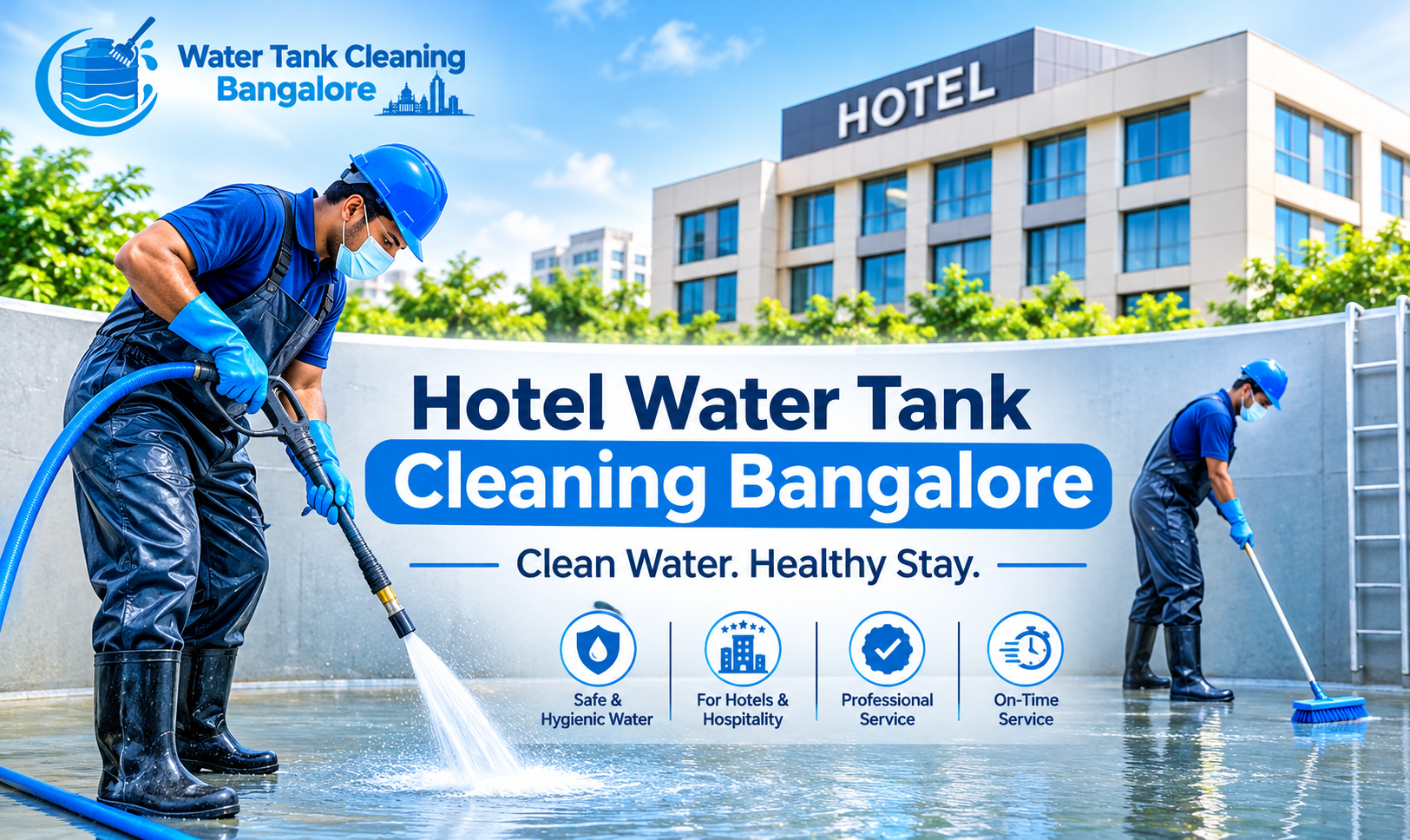
Hotel Water Tank Cleaning Bangalore: A Complete Guide to Safe and Hygienic Water Storage for Hotels
Water hygiene is one of the most important responsibilities of every hotel, resort, lodge and hospitality establishment. Guests depend on hotels for comfortable accommodation, clean bathrooms, hygienic kitchens, laundry facilities and reliable water supply. Behind all these services is an essential facility that often receives less attention than it deserves: the hotel's water storage system.
Water stored in overhead tanks, underground tanks and sumps can gradually accumulate dust, sand, suspended particles, organic matter, sediment and other contaminants. Even when water initially enters a property through a municipal connection or tanker supply, its quality can deteriorate during storage if tanks are not maintained properly.
This makes hotel water tank cleaning in Bangalore an important part of hotel maintenance and hygiene management. Regular professional cleaning helps remove accumulated sludge, sediment and deposits while supporting better water storage conditions.
Hotels in Bangalore operate with different water requirements depending on their room capacity, kitchen operations, laundry facilities, housekeeping activities and guest services. Some establishments use multiple underground storage tanks and overhead tanks to maintain uninterrupted water availability. Others depend on large sumps, borewell water, municipal supply or private water tankers.
Each arrangement requires a suitable cleaning and maintenance approach.
At Water Tank Cleaning Bangalore, we recognise the importance of maintaining clean water storage systems in hospitality establishments. Professional tank cleaning involves more than removing visible dirt. It includes proper water removal, sludge extraction, surface cleaning, appropriate disinfection, rinsing and inspection.
This guide explains why hotel water tank cleaning is important, how professional cleaning works, which areas require attention, how frequently hotels should schedule maintenance and what hotel management teams should consider when selecting a cleaning service.
Why Hotel Water Tank Cleaning Is Important
Hotels use stored water throughout the day. Unlike residential properties, hospitality establishments often experience continuous water consumption from multiple departments.
Water is required for:
-
Guest bathrooms and washrooms.
-
Restaurant kitchens and food preparation areas.
-
Housekeeping and room cleaning.
-
Laundry and linen washing.
-
Swimming pool support facilities.
-
Staff washrooms and changing areas.
-
General cleaning and maintenance.
-
Other operational requirements.
When water storage tanks are not cleaned regularly, accumulated deposits can affect the cleanliness of stored water.
1. Prevents Sludge and Sediment Accumulation
Sediment can enter water storage systems through incoming supply lines. Fine sand, rust particles, soil and other suspended materials may gradually settle at the bottom of a tank.
Over time, these deposits form a layer of sludge.
Hotels with large storage capacities may experience significant sediment accumulation, particularly when they depend on tanker water or borewell sources.
Professional hotel water tank cleaning helps remove these deposits through suitable sludge extraction and mechanical cleaning methods.
2. Supports Better Water Hygiene
Clean storage tanks are an important part of maintaining water hygiene.
Dust, organic deposits and accumulated dirt can create conditions that make stored water less hygienic. Contaminants may also enter through uncovered openings, damaged lids or poorly maintained access points.
Regular cleaning and appropriate disinfection help improve the hygienic condition of water storage systems.
However, cleaning a tank alone does not guarantee that the incoming water is safe to drink. Water quality also depends on the source, plumbing system and any treatment processes used by the establishment.
3. Protects Guest Comfort and Confidence
Guests expect hotels to maintain clean and comfortable facilities.
Water is directly connected to their daily experience, from bathing and brushing teeth to using washrooms and other amenities.
Poorly maintained water storage systems can create concerns about water appearance, odour and hygiene.
Maintaining clean tanks is therefore an important part of protecting guest confidence and supporting a positive hospitality experience.
4. Helps Maintain Kitchen Hygiene
Hotel kitchens require particular attention because water is used for washing vegetables, cleaning utensils, preparing food and maintaining kitchen surfaces.
Water contamination can create additional food safety concerns.
Hotels should ensure that water used for drinking and food preparation meets applicable potable-water quality requirements. Cleaning storage tanks, maintaining suitable water treatment and conducting appropriate water testing should be treated as connected responsibilities.
5. Supports Better Maintenance of Plumbing Systems
Sediment and suspended particles can move through plumbing systems when water is drawn from poorly maintained storage tanks.
Depending on the system design, this may contribute to deposits in pipelines, valves, filters and fixtures.
Removing accumulated sediment from tanks helps reduce the amount of loose material available to enter downstream plumbing components.
6. Helps Establish a Preventive Maintenance Routine
Emergency maintenance can disrupt hotel operations.
A planned hotel water tank cleaning schedule allows management teams to organise cleaning around low-occupancy periods, scheduled maintenance windows and available backup water arrangements.
Preventive maintenance also makes it easier to identify damaged tank covers, cracks, leakage, corrosion and other structural concerns before they become more serious.
Common Water Storage Systems Used in Hotels in Bangalore
Hotels in Bangalore use different water storage arrangements based on building size, water consumption, available infrastructure and supply conditions.
Understanding these systems helps determine the appropriate cleaning requirements.
1. Underground Water Tanks
Underground tanks are commonly used in hotels, commercial buildings and large hospitality properties.
They receive water from municipal supply, tankers, borewells or other approved sources.
Because these tanks generally have larger capacities, they may collect substantial quantities of sediment over time.
Underground water tank cleaning in Bangalore typically involves:
-
Removing or isolating the available water supply.
-
Pumping out stored water where necessary.
-
Extracting settled sludge and sediment.
-
Scrubbing internal surfaces.
-
Cleaning corners and accessible edges.
-
Applying an appropriate disinfection procedure.
-
Rinsing and removing cleaning residues.
-
Inspecting the tank before returning it to service.
Underground tanks should also be checked for damaged covers, water seepage, cracks and possible contamination entry points.
2. Overhead Water Tanks
Overhead tanks distribute stored water to guest rooms, washrooms, kitchens and other areas through gravity or pumping arrangements.
They may be installed on rooftops, service floors or elevated structural platforms.
These tanks can accumulate dust, sediment and deposits, particularly when access covers are not properly secured.
Professional overhead water tank cleaning for hotels includes internal surface cleaning, sediment removal, appropriate disinfection and inspection of the tank cover and accessible fittings.
3. Hotel Water Sumps
A sump is generally used for collecting and storing water before it is pumped into overhead tanks or distributed through other systems.
Large hotels may have multiple sumps serving different sections of the property.
Sumps require special attention because sediment often settles at the bottom and may remain undisturbed for extended periods.
Hotel sump cleaning in Bangalore should include proper sludge extraction, internal cleaning and a check for drainage or leakage problems.
4. Separate Drinking Water Storage Tanks
Some hotels maintain dedicated storage arrangements for treated drinking water.
These systems may be connected to filtration, ultraviolet treatment, reverse osmosis or other water purification equipment.
Dedicated drinking-water tanks should receive particular attention because the stored water is intended for consumption.
The cleaning procedure should be compatible with the tank material and the property's water treatment system.
5. Fire Reserve Water Tanks
Hotels may also have dedicated fire reserve tanks.
These tanks serve a different purpose from normal domestic water storage and must be maintained according to applicable fire safety requirements.
Cleaning should be coordinated with the facility management and fire safety teams to ensure that essential fire protection arrangements are not compromised.
What Causes Water Tank Contamination in Hotels?
Water contamination does not always originate from the water supply source. Several factors can affect stored water after it enters the property.
Understanding these causes helps hotel management teams prevent repeated cleaning problems.
1. Incoming Water Quality
Water supplied through tankers, borewells or municipal connections may contain suspended particles and sediment.
The amount and type of sediment can vary depending on the source and supply conditions.
If these particles settle inside storage tanks, they gradually contribute to sludge accumulation.
2. Dust and Environmental Exposure
Overhead tanks and rooftop installations may be exposed to dust, airborne particles and environmental debris.
Damaged lids, uncovered openings and improperly sealed inspection points increase the possibility of unwanted material entering the tank.
3. Poor Tank Cover Maintenance
A tank cover is an important protective component.
Broken covers, loose lids and missing access panels can allow insects, dust and other contaminants to enter stored water.
Hotel maintenance teams should check these components regularly.
4. Long Storage Periods
When water remains inside a tank for extended periods, sediment can settle at the bottom.
Storage conditions, temperature, incoming water quality and tank design can influence how quickly deposits accumulate.
5. Inadequate Previous Cleaning
Cleaning only the visible upper portion of a tank is not sufficient.
Sludge often remains in corners, bottom surfaces, joints and difficult-to-reach areas.
Incomplete cleaning may leave deposits behind, reducing the effectiveness of the maintenance activity.
6. Damaged Internal Surfaces
Cracks, deteriorating coatings, corrosion and damaged tank surfaces can create maintenance concerns.
Some materials may also develop rough areas where deposits accumulate more easily.
Structural defects should be assessed and repaired by suitable professionals.
7. Poorly Maintained Plumbing Connections
Inlet pipes, overflow pipes, outlet connections and drainage arrangements should be maintained properly.
Improperly protected openings may create opportunities for contamination.
Regular inspection of the complete storage arrangement is therefore important.
Professional Hotel Water Tank Cleaning Process in Bangalore
Professional hotel water tank cleaning should follow a planned procedure that considers the tank's capacity, material, location, water source and operational requirements.
The exact process may vary depending on the tank design and site conditions.
A typical cleaning procedure includes the following stages.
Step 1: Initial Site Inspection
The cleaning team first assesses the water storage arrangement.
This includes identifying:
-
Number of underground tanks.
-
Number of overhead tanks.
-
Approximate storage capacity.
-
Tank material and structural condition.
-
Access openings and inspection points.
-
Water inlet and outlet arrangements.
-
Sludge accumulation.
-
Drainage availability.
-
Electrical and ventilation conditions.
The team should also understand whether the tanks serve guest rooms, kitchens, drinking water systems or other critical hotel operations.
This assessment helps determine the equipment, manpower and cleaning procedure required.
Step 2: Planning the Cleaning Schedule
Hotels cannot always stop their water supply for extended periods.
Therefore, cleaning should be coordinated with the facility management team.
Possible arrangements include cleaning during low-occupancy periods, dividing the work between tanks or using an approved temporary water supply arrangement.
For hotels with multiple storage tanks, cleaning one tank at a time may help maintain availability through the remaining system, provided the plumbing design allows safe isolation.
The schedule should also consider guest requirements, kitchen operations and laundry activities.
Step 3: Isolating the Water Supply
Before cleaning begins, the relevant water supply and distribution connections should be isolated.
This prevents fresh water from entering the tank during cleaning and helps protect downstream plumbing arrangements.
The team should confirm that the tank can be safely taken out of service.
Where multiple tanks are interconnected, isolation should be carried out carefully to avoid unintended water flow.
Step 4: Removing Stored Water
Stored water is removed using suitable pumping equipment or controlled drainage arrangements.
The method depends on the tank design and the available drainage system.
Water should not be discharged in a way that creates flooding, property damage or environmental problems.
Hotels should coordinate drainage arrangements with the building maintenance team.
Step 5: Sludge and Sediment Extraction
Once the water level is sufficiently reduced, accumulated sludge is removed.
Professional cleaning teams may use wet vacuum equipment, sludge extraction pumps and other suitable tools.
This stage is particularly important for underground tanks and large hotel sumps.
The objective is to remove settled deposits rather than simply move them around inside the tank.
Step 6: Mechanical Scrubbing of Internal Surfaces
After sludge removal, the internal tank surfaces are cleaned using suitable brushes and equipment.
The process generally covers:
-
Bottom surfaces.
-
Side walls.
-
Corners.
-
Accessible joints.
-
Internal ledges.
-
Other areas where deposits are visible.
The cleaning method must be appropriate for the tank material.
Aggressive chemicals and unsuitable abrasive tools should be avoided because they may damage internal surfaces or leave unwanted residues.
Step 7: Cleaning Hard-to-Reach Areas
Some hotel water storage systems have deep sections, narrow access openings and complicated internal structures.
These areas require suitable equipment and careful cleaning.
Professional teams should ensure that accessible corners, edges and sediment collection points receive adequate attention.
Step 8: Appropriate Disinfection
After physical cleaning, an appropriate disinfection procedure may be carried out.
The disinfectant and application method should be selected according to the tank material, intended water use, applicable guidance and product instructions.
For drinking-water storage systems, only suitable products intended for potable-water applications should be used.
The correct concentration and contact time are important.
Disinfection should not be treated as an alternative to sludge removal or mechanical cleaning.
Step 9: Rinsing and Residue Removal
After the required contact period, the tank is rinsed where the procedure requires it.
Cleaning residues and excess disinfectant should be removed according to the applicable product instructions and water hygiene requirements.
The tank should not be returned to normal service until the cleaning procedure has been completed appropriately.
Step 10: Final Inspection
The cleaning team and hotel maintenance representative should inspect the tank before refilling.
The inspection may include:
-
Checking for remaining visible sludge.
-
Confirming that cleaning residues have been removed.
-
Checking accessible internal surfaces.
-
Examining the tank cover.
-
Looking for visible cracks or leakage.
-
Checking inlet and outlet fittings.
-
Confirming that drainage points are clear.
Any structural defect or suspected contamination source should be reported for further action.
Step 11: Refilling and Returning the Tank to Service
After cleaning and disinfection are completed, the tank can be refilled using an appropriate water supply.
For potable-water systems, the hotel should follow suitable water quality verification procedures before authorising the water for drinking or food preparation.
The maintenance team should also confirm that the tank has been properly closed and that the supply system is functioning normally.
Special Requirements for Different Types of Hotels
Not every hospitality establishment has the same water consumption pattern.
A small lodge and a large luxury hotel may have completely different storage capacities, operating schedules and cleaning requirements.
1. Hotel Water Tank Cleaning for Luxury Hotels
Luxury hotels typically provide several facilities that depend on a consistent water supply.
These may include guest suites, restaurants, spas, laundry services, swimming pool support systems and large housekeeping operations.
Their water storage systems may include several tanks serving separate departments.
A planned cleaning programme should identify every tank, its purpose and the departments dependent on it.
Cleaning should be scheduled in coordination with engineering and housekeeping teams.
2. Budget Hotel and Lodge Water Tank Cleaning
Budget hotels and lodges may operate with comparatively limited storage infrastructure.
However, smaller establishments still require regular water tank maintenance.
Their cleaning requirements may include one underground sump, one or more overhead tanks and dedicated drinking-water storage.
A documented cleaning schedule helps smaller hotel operators maintain consistent maintenance practices.
3. Resort Water Tank Cleaning
Resorts may have larger properties with separate accommodation blocks, restaurants, landscaped areas and recreational facilities.
Water storage systems may be distributed across different sections.
Cleaning should be planned according to the location and function of each tank.
Remote tanks should not be overlooked simply because they are located away from the main building.
4. Restaurant and Hotel Kitchen Water Tank Cleaning
Restaurants and hotel kitchens use water extensively for food preparation, washing and cleaning.
Storage tanks supplying these areas should receive careful attention.
Hotels should distinguish between potable-water storage and water used for non-potable applications.
Appropriate cleaning, disinfection and water quality verification are essential for drinking-water systems.
5. Serviced Apartments and Extended-Stay Hotels
Serviced apartments and extended-stay establishments may have continuous water consumption throughout the day.
They often combine residential-style facilities with hotel housekeeping and maintenance arrangements.
Their storage systems should be inspected and cleaned according to actual use, tank condition and water quality observations.
Benefits of Professional Hotel Water Tank Cleaning Services
Hiring a professional cleaning service offers several operational advantages.
1. Systematic Sludge Removal
Professional equipment helps remove accumulated sediment and sludge more effectively than basic manual cleaning.
This is particularly useful for large underground tanks and deep sumps.
2. Improved Storage Hygiene
Proper cleaning and disinfection support better hygiene inside the water storage system.
This helps hotel management maintain cleaner storage conditions.
3. Reduced Maintenance Disruptions
A planned cleaning schedule makes it easier to coordinate water availability and avoid unnecessary disruption to hotel operations.
4. Better Inspection and Maintenance Awareness
Professional cleaning provides an opportunity to identify visible tank damage, defective covers, leakage and other maintenance concerns.
5. Support for Hotel Hygiene Programmes
Water storage maintenance can be included in broader housekeeping, engineering and sanitation programmes.
This helps establish clear responsibility for maintaining the hotel's water infrastructure.
6. Better Maintenance Records
Documenting cleaning dates, tank locations, observations and corrective actions makes future maintenance easier to manage.
7. Greater Operational Confidence
A properly maintained water storage system gives hotel management a clearer understanding of the condition of an important facility.
It also supports communication with maintenance teams and relevant service providers.
How Frequently Should Hotels Clean Their Water Tanks?
There is no single cleaning interval suitable for every hotel.
The required frequency depends on tank capacity, water source, storage conditions, water quality, sediment accumulation and applicable public health requirements.
Hotels should establish a cleaning schedule based on a risk assessment rather than relying entirely on a fixed calendar.
The following factors should be considered.
1. Type of Water Supply
Hotels using tanker water or borewell water may experience different sediment levels compared with properties receiving treated municipal supply.
Water quality should be monitored to determine whether more frequent inspection or cleaning is necessary.
2. Tank Capacity
Large tanks may accumulate substantial quantities of sediment because they store greater volumes of water.
However, capacity alone does not determine cleaning frequency.
Water turnover, source quality and storage conditions are also important.
3. Visible Sediment
If sediment, dirt or deposits are noticed during an inspection, the tank should be assessed for cleaning.
Visible contamination should not be ignored until the next scheduled maintenance date.
4. Water Quality Complaints
Unusual colour, smell or visible particles should prompt an investigation.
The problem may originate from the source, tank, internal plumbing or treatment equipment.
Hotels should investigate the cause rather than assuming that tank cleaning alone will resolve every water quality issue.
5. Applicable Hygiene Requirements
Hotels should follow relevant local requirements, public health recommendations and any applicable food safety or hospitality standards.
The maintenance schedule should be reviewed whenever operating conditions change.
6. Maintenance History
Previous cleaning reports can help identify recurring issues.
For example, if a particular underground tank consistently accumulates heavy sediment, management may need to review the incoming water supply or improve pre-treatment.
A practical hotel maintenance programme should include routine inspections, planned cleaning and additional cleaning whenever contamination or unusual deposits are identified.
Challenges in Cleaning Large Hotel Water Tanks
Hotel water tank cleaning can involve several practical challenges.
Professional planning helps address these issues without compromising safety or operational continuity.
1. Large Storage Capacity
Some hotels have underground tanks that hold substantial quantities of water.
Removing stored water, extracting sludge and cleaning the complete internal surface requires appropriate equipment and sufficient manpower.
2. Limited Access
Certain tanks have narrow inspection openings or restricted access.
Cleaning teams should assess accessibility before starting work and use suitable methods.
3. Continuous Water Demand
Hotels may have guests occupying rooms throughout the day.
Cleaning should be coordinated with the engineering department to maintain essential water services through approved alternative arrangements.
4. Multiple Tanks
Large properties may have several storage systems in different buildings.
The cleaning team should maintain a tank inventory to ensure that every relevant unit receives attention.
5. Difficult Drainage Conditions
Underground tanks may not have convenient drainage points.
Suitable pumping and waste removal arrangements should be planned in advance.
6. Worker Safety
Water tank cleaning can involve slippery surfaces, electrical equipment, confined spaces and restricted ventilation.
These hazards require proper assessment and control.
Workers should not enter a tank unless an appropriate confined-space safety procedure is in place.
Safety Precautions During Hotel Water Tank Cleaning
Safety is a critical part of professional water tank cleaning.
Hotels should ensure that service providers follow appropriate occupational safety practices.
1. Confined-Space Assessment
Underground tanks and sumps may qualify as confined spaces depending on their design and conditions.
Entry can involve risks associated with oxygen deficiency, hazardous atmospheres, restricted movement and difficult rescue conditions.
Where entry is necessary, it must be controlled through a suitable confined-space entry programme.
This may require atmospheric testing, ventilation, trained personnel, supervision, communication systems and rescue arrangements.
2. Electrical Safety
Pumps, cables and other electrical equipment must be suitable for the working environment.
Electrical connections should be protected from water exposure, and equipment should be checked before use.
3. Appropriate Protective Equipment
Cleaning personnel should use suitable protective equipment based on the work and chemical hazards.
This may include gloves, protective footwear, eye protection, helmets and respiratory protection where required.
4. Safe Chemical Handling
Disinfectants and cleaning chemicals must be handled according to their safety data sheets and manufacturer instructions.
Different chemicals should never be mixed unless the product instructions explicitly permit it.
5. Safe Waste Disposal
Extracted sludge and wastewater should be handled and disposed of through appropriate arrangements.
Disposal should comply with applicable local requirements.
6. Protecting Hotel Guests and Staff
The work area should be clearly identified and restricted to authorised personnel.
Open tanks, electrical equipment, hoses and wet floors can create hazards for hotel employees and guests.
Suitable barriers and warning signs should be used.
7. Maintaining Emergency Access
Cleaning activities should not block essential emergency routes or interfere with fire protection equipment.
Hotel management should coordinate the work with the engineering and safety teams.
Hotel Water Tank Cleaning and Water Quality Testing
Cleaning and water quality testing are two different but complementary activities.
Cleaning removes physical deposits and helps improve the hygienic condition of the tank.
Water testing evaluates the quality of water and helps identify potential problems that may not be visible.
Hotels should consider water quality testing based on the intended use of water and applicable requirements.
Important Water Quality Parameters
Depending on the water source and intended use, testing may include:
-
pH.
-
Turbidity.
-
Total dissolved solids.
-
Total hardness.
-
Residual disinfectant levels.
-
Microbiological indicators.
-
Other relevant chemical parameters.
For drinking-water systems, testing should be conducted through a competent laboratory using appropriate sampling and testing procedures.
The selection of parameters should follow applicable drinking-water standards and the hotel's water safety programme.
Why Microbiological Testing Matters
Water can appear clear and still contain microorganisms.
Therefore, visual inspection alone cannot confirm that stored water is microbiologically safe.
Microbiological testing may include appropriate indicators such as total coliforms and E. coli, depending on the applicable testing standard.
Hotels should seek professional advice if test results indicate contamination.
When Should Hotels Consider Testing?
Water quality testing may be particularly important:
-
After cleaning and disinfection of drinking-water storage tanks.
-
When a new water source is introduced.
-
After repairs to storage or distribution systems.
-
When guests or employees report unusual water conditions.
-
When contamination is suspected.
-
As part of routine hotel water quality monitoring.
If contamination is suspected, the affected water should not be used for drinking or food preparation until the issue has been investigated and the water is confirmed suitable for the intended use.
How to Choose the Right Hotel Water Tank Cleaning Company in Bangalore
Selecting a reliable service provider is an important decision for hotel owners and facility managers.
A suitable cleaning company should understand commercial water storage systems and the operational requirements of hospitality properties.
Consider the following factors before making a decision.
1. Experience with Commercial Properties
Choose a service provider familiar with large underground tanks, overhead tanks, hotel sumps and commercial storage arrangements.
Residential tank cleaning experience alone may not be sufficient for complex hotel installations.
2. Suitable Cleaning Equipment
The company should have access to equipment appropriate for the tank size and cleaning requirements.
This may include sludge extraction pumps, wet vacuum equipment, suitable scrubbing tools and other specialised cleaning equipment.
3. Clear Cleaning Procedure
Ask the service provider to explain the complete process.
A professional cleaning plan should cover water removal, sludge extraction, mechanical cleaning, disinfection, rinsing and final inspection.
4. Safety Practices
Check whether the service provider follows appropriate safety procedures.
This is especially important when cleaning deep underground tanks and restricted-access sumps.
5. Transparent Pricing
The company should explain the pricing structure before work begins.
Charges may depend on tank capacity, number of tanks, accessibility, sludge accumulation, equipment requirements and the total scope of work.
6. Flexible Scheduling
Hotel operations often require careful scheduling.
A suitable service provider should coordinate with the management team to minimise disruption.
7. Cleaning Documentation
Request a service report after completion.
The report should ideally include the date, tank identification, cleaning activities, observations and any recommended corrective action.
8. Clear Communication
A professional company should communicate the scope of work, preparation requirements and completion details clearly.
This helps hotel management plan maintenance efficiently.
Factors Affecting Hotel Water Tank Cleaning Cost in Bangalore
The cost of hotel water tank cleaning varies depending on the property and the condition of its storage systems.
A small lodge with a single overhead tank will generally have different requirements from a large hotel with multiple underground sumps and rooftop tanks.
The main cost factors include the following.
1. Tank Capacity
Larger tanks generally require more time, equipment and labour.
2. Number of Tanks
Cleaning multiple tanks may involve additional manpower and coordination.
3. Tank Accessibility
Rooftop tanks, underground sumps and restricted-access storage systems require different cleaning arrangements.
4. Sludge Accumulation
Heavy sludge deposits may require additional extraction and waste handling.
5. Tank Condition
Damaged internal surfaces, leakage and difficult drainage conditions can increase the complexity of the work.
6. Cleaning and Disinfection Requirements
The cleaning procedure may vary according to whether the tank supplies drinking water, general domestic water or another purpose.
7. Emergency Service Requirements
Urgent cleaning may require additional scheduling and equipment arrangements.
8. Property Size and Operational Restrictions
Hotels with continuous operations may require phased cleaning or work outside normal operating hours.
Hotel management should request a site assessment and written quotation instead of relying on a general price estimate.
Why Hotels in Bangalore Need a Planned Water Tank Maintenance Programme
Bangalore has a diverse hospitality sector, including business hotels, boutique properties, resorts, serviced apartments, budget accommodation and luxury establishments.
Water supply arrangements can vary considerably between properties.
Some hotels rely mainly on municipal water, while others use a combination of borewell water, tankers and stored supply.
This makes preventive maintenance particularly important.
A structured water tank maintenance programme should include the following activities.
1. Maintain a Complete Tank Inventory
Prepare a list of every storage tank and sump within the property.
Record its location, capacity, purpose and departments served.
2. Assign Maintenance Responsibility
The hotel engineering or facility management team should identify the person responsible for inspecting and maintaining each tank.
3. Conduct Routine Visual Inspections
Check tank covers, access openings, visible surfaces, overflow arrangements and signs of leakage.
4. Record Cleaning Dates
Maintain a central record of every cleaning activity.
This helps management identify overdue maintenance and recurring problems.
5. Monitor Water Quality
Establish a testing programme appropriate to the water source and intended use.
6. Review Water Supply Sources
If sediment accumulation is frequent, investigate the quality of incoming water.
Additional filtration or other suitable treatment may be necessary.
7. Inspect After Repairs
Any maintenance work involving tanks or connected plumbing should be followed by appropriate inspection and, where necessary, cleaning and water quality verification.
8. Review the Programme Regularly
The cleaning schedule should be updated based on inspection findings, water quality results, guest complaints and changes in hotel operations.
Hotel Water Tank Cleaning Checklist for Facility Managers
A practical checklist helps hotel engineering teams manage cleaning activities systematically.
Before Cleaning
-
Identify all tanks included in the work.
-
Confirm tank capacity and location.
-
Inspect tank covers and access points.
-
Discuss water supply requirements.
-
Coordinate the schedule with hotel departments.
-
Arrange temporary water supply if necessary.
-
Confirm electrical and drainage arrangements.
-
Review worker safety procedures.
During Cleaning
-
Isolate the appropriate tank.
-
Remove stored water safely.
-
Extract accumulated sludge.
-
Scrub accessible internal surfaces.
-
Clean corners and difficult areas.
-
Apply suitable disinfection where required.
-
Follow the specified contact time.
-
Remove residues through appropriate rinsing.
-
Maintain worksite safety.
After Cleaning
-
Conduct a final visual inspection.
-
Confirm that the tank is properly closed.
-
Refill using an appropriate water source.
-
Verify water quality where required.
-
Check the connected supply system.
-
Record the cleaning date.
-
Document defects and maintenance recommendations.
-
Schedule the next inspection.
This checklist can be adapted to the size and operating requirements of each hotel.
Why Choose Professional Water Tank Cleaning Bangalore Services?
Hotel water storage systems require consistent maintenance and a cleaning approach suitable for commercial operations.
Professional Water Tank Cleaning Bangalore services can help hotels maintain their underground tanks, overhead tanks and sumps through systematic cleaning and appropriate disinfection procedures.
At Water Tank Cleaning Bangalore, the objective is to support hospitality establishments with practical water storage maintenance solutions.
A professional approach should focus on:
-
Thorough removal of accumulated sludge and sediment.
-
Suitable cleaning methods for different tank materials.
-
Attention to underground and overhead storage systems.
-
Appropriate disinfection procedures.
-
Careful handling of cleaning residues.
-
Coordination with hotel maintenance teams.
-
Safe work practices.
-
Clear communication about visible maintenance issues.
Every hotel has different storage requirements. Therefore, cleaning arrangements should be based on the actual tank configuration and site conditions.
Whether the property is a small lodge, business hotel, luxury hotel, resort or serviced apartment, maintaining clean water storage systems should remain an essential part of its facility management programme.
Conclusion
Hotel water tank cleaning in Bangalore is an important maintenance activity that supports water hygiene, guest comfort and efficient hotel operations.
Water stored in underground tanks, overhead tanks and sumps can accumulate sludge, sediment and other deposits over time. Without proper maintenance, these deposits may affect storage hygiene and create additional concerns for hotel management.
Professional cleaning involves inspection, water removal, sludge extraction, mechanical scrubbing, suitable disinfection, rinsing and final checks. These activities should be performed according to the tank design, intended water use and applicable safety requirements.
Hotels should also maintain regular inspection records, monitor water quality and investigate unusual changes in water appearance, odour or test results.
A well-planned maintenance programme helps hospitality establishments manage their water storage infrastructure more effectively.
For hotels, resorts, lodges and commercial hospitality properties, investing in professional water tank cleaning is a practical step towards maintaining cleaner storage systems and supporting a hygienic environment for guests and employees.