Apartment Water Tank Cleaning Bangalore
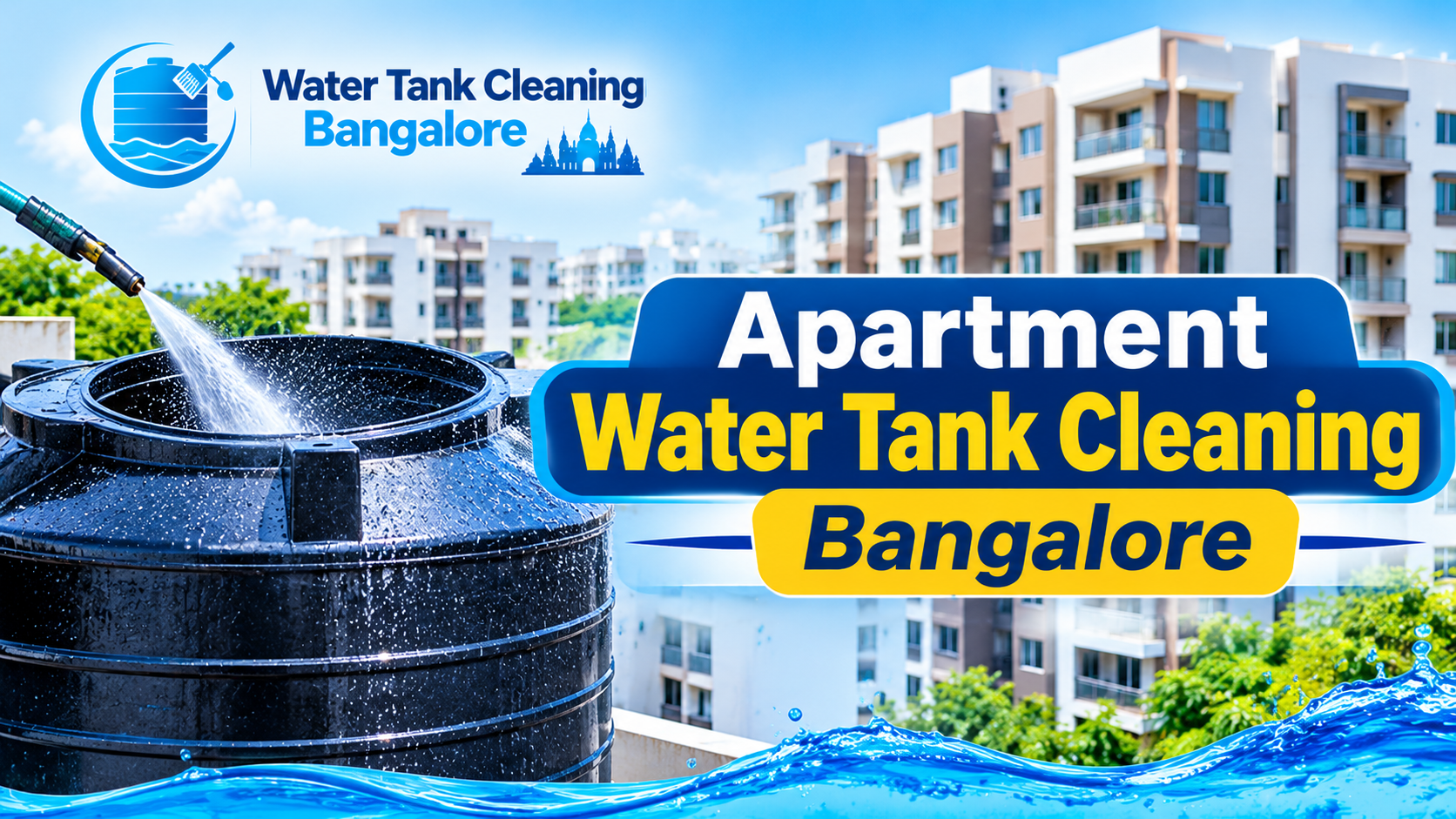
Apartment Water Tank Cleaning Bangalore – Professional Cleaning for Apartments and Housing Societies
Clean and hygienic water is essential for every apartment community. Whether it is a small residential building or a large gated community, residents depend on underground sumps and overhead water tanks for their everyday water requirements. However, these storage systems can gradually collect sludge, sand, dust, algae, rust and other contaminants. Without regular maintenance, the accumulated deposits may affect water quality and create hygiene concerns for residents.
Apartment water tank cleaning in Bangalore is an important maintenance service for apartment associations, resident welfare associations (RWAs), property managers and facility management teams. Professional cleaning helps remove accumulated dirt, sediment and organic deposits from water storage systems while supporting better water hygiene.
Water Tank Cleaning Bangalore provides professional cleaning solutions for apartments, gated communities and housing societies. The service is designed for buildings with multiple overhead tanks, underground sumps and large-capacity water storage systems. With planned scheduling, suitable cleaning equipment and a systematic process, apartment associations can maintain their water storage facilities with less disruption to residents.
This guide explains the importance of apartment water tank cleaning, the professional cleaning process, suitable maintenance schedules, cost factors and how housing societies can plan regular tank maintenance in Bangalore.
Why Is Apartment Water Tank Cleaning Important?
Apartment buildings often store large quantities of water to meet the daily requirements of multiple households. Water may come from municipal supply, borewells, water tankers or a combination of sources. Regardless of the source, storage tanks require regular inspection and cleaning.
Over time, particles entering the storage system can settle at the bottom. Dust, sand, rust and other deposits may accumulate on the walls and floor. If moisture and suitable environmental conditions are present, algae and biofilm may also develop.
Regular professional cleaning helps address these issues.
1. Removes Sludge and Sediment
Sludge is one of the most common problems in underground sumps and overhead tanks. It can form from suspended particles, sand, soil, rust and other material entering the water storage system.
If the tank is not cleaned, deposits can accumulate at the bottom and become increasingly difficult to remove through normal water drainage.
Professional apartment tank cleaning includes draining the tank, removing settled sludge and washing the internal surfaces.
2. Helps Maintain Better Water Hygiene
A tank that appears clean from the outside may contain deposits or biofilm inside. These contaminants can affect stored water quality.
Thorough cleaning followed by appropriate disinfection helps improve the hygiene of the storage environment. However, cleaning alone cannot certify that water is safe for drinking. Where contamination is suspected, residents should arrange suitable water quality testing.
3. Reduces Algae and Organic Deposits
Tanks exposed to sunlight, poorly sealed covers or contaminated incoming water may develop algae and organic deposits.
These deposits can affect water appearance and may contribute to unpleasant smells. Professional cleaning removes visible buildup and helps restore the internal surfaces to a cleaner condition.
4. Helps Prevent Unpleasant Smell and Discolouration
Residents may notice changes in water colour, smell or appearance when storage tanks become dirty or when the incoming supply contains sediment.
Cleaning the tank can remove accumulated material that contributes to these problems. If discolouration or odour continues after cleaning, the apartment association should investigate the water source, pipelines and distribution system.
5. Supports Better Plumbing Maintenance
Sediment can move from storage tanks into connected pipes and plumbing equipment. Depending on the system, this may contribute to clogged filters, blocked outlets and additional maintenance requirements.
Removing accumulated deposits from tanks helps reduce the amount of loose sediment entering the distribution system.
6. Supports Resident Confidence
Water is used throughout an apartment complex for drinking, cooking, bathing, cleaning and other household activities. Residents naturally expect the association to maintain shared water storage facilities responsibly.
A planned cleaning programme, clear communication and proper maintenance records demonstrate that the society takes water hygiene seriously.
Common Types of Water Tanks in Apartment Buildings
Apartment complexes in Bangalore may have several water storage systems. Each type has different access requirements, capacities and cleaning considerations.
1. Underground Water Sumps
Underground sumps are commonly installed at ground level, in basements or below the building structure. They receive water from tankers, borewells or municipal supply and store it before pumping it to overhead tanks.
Because these tanks have large storage capacities, they can collect considerable quantities of sediment.
Professional underground water tank cleaning generally involves:
-
Removing stored water.
-
Extracting settled sludge and sediment.
-
Scrubbing the floor and internal walls.
-
Using suitable pressure-washing equipment.
-
Removing loosened waste material.
-
Applying appropriate disinfection.
-
Completing a final inspection.
For large underground tanks, access planning and confined-space safety are especially important.
2. Overhead Water Tanks
Overhead tanks are installed on rooftops or elevated structures. They distribute water to individual flats through gravity or pumping systems.
Although these tanks may be smaller than underground sumps, they still require regular cleaning.
Common deposits include:
-
Dust and airborne particles.
-
Sand and sediment.
-
Algae.
-
Rust particles.
-
Slime and biofilm.
-
Deposits from incoming water.
Cleaning should include the tank floor, walls, corners and other accessible internal surfaces.
3. Terrace Water Storage Tanks
Some apartment buildings use multiple terrace tanks to distribute water across different blocks or floors.
These tanks may have separate inlets, outlets and overflow arrangements. Each tank should be included in the society's maintenance schedule.
4. Drinking Water Storage Tanks
Some apartment communities maintain dedicated tanks for drinking water or filtered water storage.
These systems require particular attention to hygiene, suitable cleaning materials and appropriate disinfection procedures. The cleaning process should follow the requirements for the intended water use.
5. Rainwater Harvesting Storage Tanks
Rainwater harvesting systems may include underground storage chambers and dedicated tanks.
Leaves, dust, soil and other debris can enter through collection surfaces and filtration arrangements. Periodic inspection and cleaning help maintain the system.
6. Fire Safety Water Tanks
Fire safety tanks are maintained for emergency use. Their maintenance requirements may differ from ordinary domestic water storage systems.
Cleaning should be planned without compromising fire protection arrangements. Apartment associations should coordinate with their facility manager and fire safety maintenance provider before scheduling work.
Professional Apartment Water Tank Cleaning Process in Bangalore
A systematic cleaning procedure is essential for apartment complexes because they often have multiple tanks and a large number of residents depending on the same water supply.
The exact procedure depends on tank capacity, construction, contamination level and accessibility.
Step 1: Initial Inspection and Planning
Before starting the work, the cleaning team should inspect the available water storage systems.
The inspection may cover:
-
Number of underground sumps.
-
Number of overhead tanks.
-
Approximate tank capacity.
-
Tank access points.
-
Existing sludge accumulation.
-
Condition of tank covers.
-
Water inlet and outlet arrangements.
-
Pumping and drainage facilities.
The apartment association can share building drawings or tank details if available. This helps the service provider plan equipment, manpower and estimated working time.
Step 2: Informing Residents and Coordinating Water Supply
Water tank cleaning may require temporary interruption of the water supply.
The association should inform residents in advance about the proposed date, expected duration and affected blocks.
For large communities, cleaning can be scheduled in phases. This may allow unaffected blocks to continue receiving water while other storage systems are being cleaned.
Step 3: Controlled Water Drainage
The water remaining in the tank is drained using an appropriate arrangement.
The team should ensure that drainage does not cause flooding, damage or inconvenience to residents.
For apartment complexes, drainage planning is especially important because underground sumps may contain large quantities of water.
Step 4: Sludge and Sediment Removal
After drainage, settled deposits are removed from the tank floor.
Depending on the amount and consistency of the sludge, the team may use manual tools, sludge extraction equipment or vacuum systems.
This stage is important because ordinary rinsing may not remove thick deposits that have settled over a long period.
Step 5: Internal Scrubbing and Pressure Washing
The tank floor, walls and accessible corners are cleaned to loosen deposits.
Suitable pressure-washing equipment may be used to remove stubborn dirt and accumulated material.
The equipment and pressure should be selected according to the tank's construction and surface condition. Excessive pressure should be avoided where it could damage the tank lining or internal fittings.
Step 6: Wastewater and Residue Removal
Loosened sludge and dirty water are removed from the tank.
The team should ensure that waste material is not allowed to enter the clean water supply or nearby drainage areas improperly.
Proper removal of cleaning residue helps prepare the tank for the next stage.
Step 7: Disinfection
Once the tank has been cleaned and rinsed, an appropriate disinfectant may be applied according to its intended use and the product instructions.
The concentration and contact time should follow the relevant manufacturer's directions and applicable water hygiene guidance.
Disinfection should not be treated as a substitute for physical cleaning. Heavy deposits must first be removed so that the disinfectant can be used appropriately.
Step 8: Final Rinse and Inspection
The tank is rinsed as required to remove cleaning residue and excess disinfectant.
The team should inspect the accessible internal surfaces and check that loose dirt, sludge and cleaning materials have been removed.
Any visible damage, leakage or cover-related issue should be brought to the apartment association's attention.
Step 9: Refilling and Restoring the Water Supply
After the cleaning process is completed, the tank can be refilled according to the building's water supply arrangement.
The facility team should verify the operation of pumps, valves and connected distribution systems before restoring normal supply.
If water quality remains doubtful, arrange appropriate laboratory testing before relying on the water for drinking.
How Often Should Apartment Water Tanks Be Cleaned?
The suitable cleaning frequency depends on the water source, storage conditions, tank capacity, sediment levels and water usage.
A practical maintenance schedule for many apartment communities is to inspect their tanks regularly and plan professional cleaning approximately every three to six months. The website also recommends a three-to-six-month cleaning interval for routine tank maintenance.
A society may need more frequent attention if it experiences:
-
Visible sludge accumulation.
-
Algae or slime inside tanks.
-
Unpleasant water smell.
-
Changes in water colour.
-
Heavy sediment entering from the supply source.
-
Contamination incidents.
-
Long periods without cleaning.
Suggested Apartment Tank Maintenance Schedule
| Tank type | Suggested maintenance approach |
|---|---|
| Underground sump | Inspect regularly; plan cleaning based on sediment and water conditions |
| Overhead tank | Inspect regularly; consider cleaning every 3–6 months |
| Drinking water storage tank | Follow a stricter hygiene schedule based on use and water quality |
| Rainwater storage tank | Inspect after major rainfall and remove accumulated debris |
| Fire safety tank | Follow the building's fire safety maintenance requirements |
| Recycled water tank | Follow the system-specific maintenance procedure |
This is a general planning guide, not a substitute for a site-specific assessment. Apartment associations should adjust the schedule according to actual tank conditions and applicable requirements.
Signs That Your Apartment Water Tank Needs Cleaning
Apartment associations should not wait for residents to complain before inspecting their water storage systems.
The following signs may indicate that cleaning or further investigation is necessary.
1. Muddy or Cloudy Water
If water appears cloudy or contains visible particles, sediment may be entering the distribution system.
The source could be the tank, incoming supply or connected plumbing.
2. Unpleasant Smell
A foul or unusual smell may indicate organic deposits, contamination or a problem with the incoming water.
The source should be identified rather than assuming that tank cleaning alone will resolve the issue.
3. Green Deposits or Algae
Green growth on tank surfaces can indicate conditions that support algae development.
Tanks should be inspected for light entry, damaged covers and other conditions that may contribute to growth.
4. Sludge at the Bottom
If the tank floor contains a thick layer of sediment, routine flushing may not be sufficient.
Professional sludge removal and internal cleaning may be required.
5. Resident Complaints
Repeated complaints about water colour, smell or visible particles should be investigated promptly.
The apartment management team should record complaints, inspect the storage system and arrange water testing where appropriate.
Apartment Water Tank Cleaning for Different Types of Communities
Bangalore has many different residential building types. Their tank cleaning requirements depend on the number of flats, storage capacity and water distribution design.
1. High-Rise Apartment Buildings
High-rise buildings may have multiple underground sumps, intermediate storage tanks and overhead tanks.
Cleaning needs to be coordinated carefully because water distribution may be divided across several floors or towers.
A professional cleaning plan should identify each tank, its capacity, access arrangement and connection to the building's supply system.
2. Gated Communities
Large gated communities may contain several residential blocks, clubhouses and common facilities.
Their storage systems may include:
-
Main underground sumps.
-
Block-wise overhead tanks.
-
Common-area storage tanks.
-
Dedicated drinking water tanks.
-
Rainwater harvesting storage.
-
Fire safety tanks.
A planned cleaning programme helps the association coordinate maintenance across the entire property.
3. Small Apartment Buildings
Smaller residential buildings may have one underground sump and one or more overhead tanks.
Even where the system is relatively simple, regular cleaning remains important.
The association can schedule the work during a period when residents can manage a short water supply interruption.
4. Luxury Apartments
Luxury apartments often have extensive water storage and distribution arrangements.
Their facility teams may prefer scheduled maintenance, documented cleaning activities and service reports.
The service provider should understand the building's access requirements and coordinate with the property management team.
5. Older Residential Complexes
Older buildings may have tanks with accumulated deposits, damaged covers, worn surfaces or difficult access points.
An inspection before cleaning helps identify maintenance concerns that may require separate repair work.
Apartment Sump Cleaning Bangalore
Underground sump cleaning is a major part of apartment water tank maintenance.
Sumps receive water from different sources and may collect sediment over time. Since these tanks often have large capacities, cleaning can require specialised equipment and careful planning.
Professional apartment sump cleaning may include:
-
Inspection of the sump and access points.
-
Controlled drainage of stored water.
-
Removal of settled sludge.
-
Scrubbing of the internal floor and walls.
-
Pressure washing where suitable.
-
Extraction of dirty water and loosened deposits.
-
Appropriate disinfection.
-
Final inspection before refilling.
Underground tanks can present serious confined-space hazards. Entry should only take place under a suitable risk assessment and appropriate safety procedures. Workers should not enter a sump without proper precautions, trained supervision and suitable equipment.
For apartment associations, professional sump cleaning can help maintain the main storage system that supplies water to the rest of the building.
Overhead Water Tank Cleaning for Apartments
Overhead tanks play an important role in distributing water to individual flats.
Since these tanks are located on rooftops or elevated structures, cleaning requires safe access and suitable working arrangements.
The process may include:
-
Checking the tank cover and access point.
-
Draining the stored water.
-
Removing visible sludge and deposits.
-
Scrubbing the tank floor and walls.
-
Washing internal surfaces.
-
Removing dirty water.
-
Applying suitable disinfection.
-
Rinsing and inspecting the tank.
Apartment facility managers should also check for damaged covers, open vents and possible entry points for insects, dust or debris.
A properly maintained cover helps reduce the entry of external contaminants between cleaning cycles.
How Apartment Associations Can Plan Tank Cleaning
Successful cleaning depends on more than the work performed inside the tank. The association must also coordinate residents, facility staff and the service provider.
1. Prepare a Tank Inventory
Create a list of all water storage tanks in the property.
Record their locations, approximate capacities, intended use and connected building blocks.
2. Maintain Cleaning Records
Keep a record of the date, tank identification, service provider, work completed and any issues identified.
Before-and-after photographs can help the facility team maintain a useful maintenance history.
3. Notify Residents in Advance
Share the cleaning schedule through notices, resident apps, email or messaging groups.
Mention the expected water interruption and any temporary arrangements.
4. Schedule Work in Phases
Where the building has several tanks, consider cleaning them in phases.
This may help reduce disruption, depending on the building's storage capacity and water distribution design.
5. Coordinate With Facility Management
The facility team should coordinate pumps, valves, drainage, access keys and water refilling.
A designated representative should be available during the work.
6. Review the Work After Completion
Ask the service provider to explain which tanks were cleaned and whether any issues were identified.
Maintain the service report and schedule the next inspection.
Benefits of Hiring Professional Apartment Water Tank Cleaners
Large apartment tanks are different from small household storage tanks. They may contain significant quantities of sludge and require specialised cleaning equipment.
Professional services can provide several practical benefits.
Suitable Equipment
Professional cleaning teams may use pressure washers, sludge extraction systems, vacuum equipment and other tools selected for the tank.
Planned Cleaning
A service provider experienced with apartments can coordinate multiple tanks and work around the building's supply arrangements.
Thorough Sludge Removal
Physical removal of settled deposits is an important part of cleaning large storage systems.
Appropriate Disinfection
Suitable disinfection can be included after physical cleaning, based on the tank's intended use and the product instructions.
Reduced Maintenance Disruption
Advance planning can help the association organise water interruptions and reduce inconvenience to residents.
Better Maintenance Records
A documented service history helps facility managers monitor cleaning dates and plan future maintenance.
How Much Does Apartment Water Tank Cleaning Cost in Bangalore?
The cost of apartment water tank cleaning in Bangalore varies from one property to another. A small apartment building with a single sump and two overhead tanks will have different requirements from a large gated community with several high-capacity storage systems.
A reliable quotation should be based on the actual site requirements.
Important cost factors include:
1. Tank Capacity
Larger tanks generally require more time, labour and equipment.
2. Number of Tanks
The total number of underground and overhead tanks affects the overall work involved.
3. Sludge Accumulation
Tanks that have not been cleaned for a long time may contain heavy deposits that require additional removal work.
4. Accessibility
Rooftop access, basement entry, narrow openings and drainage arrangements can affect the time and equipment required.
5. Cleaning Method
The equipment and cleaning procedure depend on tank construction and contamination levels.
6. Number of Apartment Blocks
Large residential communities may require phased cleaning and additional coordination.
7. Additional Requirements
Water testing, detailed reports or maintenance arrangements may be quoted separately depending on the service agreement.
Apartment associations should request a clear quotation that identifies the tanks included, the cleaning procedure, the disinfection arrangements and any additional charges.
For an accurate estimate, share the number of tanks, approximate capacities and property location with the service provider.
How to Choose the Best Apartment Water Tank Cleaning Company in Bangalore
Selecting a suitable service provider is important because apartment water storage systems serve many households.
Before booking, apartment associations should consider the following points.
Experience With Apartment and Society Tanks
Choose a company that understands large underground sumps, overhead tanks and multi-block residential properties.
Cleaning Equipment
Ask about the equipment used for sludge removal, pressure washing and wastewater extraction.
Worker Safety
Tank cleaning can involve wet surfaces, electrical equipment and confined spaces. Ask about worker training, access controls and safety procedures.
Disinfection Procedure
Confirm which disinfectant is used, whether it is suitable for the intended water system and how it is applied.
Transparent Quotation
The quotation should clearly mention the number of tanks, capacities, scope of work and any additional requirements.
Flexible Scheduling
The company should be able to coordinate with the apartment association and facility management team.
Service Documentation
Ask whether the provider can share completion details and photographs of the cleaning work.
Customer Feedback
Review customer feedback and service history before making a decision.
Why Choose Water Tank Cleaning Bangalore for Apartment Tank Cleaning?
Water Tank Cleaning Bangalore provides water tank and sump cleaning services for homes, apartments, housing societies and commercial properties.
The apartment and society cleaning service is designed to support residential communities that require scheduled maintenance for multiple water storage systems.
Key service features include:
-
Apartment and housing society tank cleaning.
-
Underground sump cleaning.
-
Overhead water tank cleaning.
-
Sludge and sediment removal.
-
Pressure washing of suitable tank surfaces.
-
Rinsing and appropriate disinfection.
-
Cleaning arrangements planned around property requirements.
-
Service availability across Bangalore, subject to confirmation.
The company's published cleaning process includes draining and sludge removal, scrubbing and pressure washing, rinsing and disinfection, followed by inspection before handover.
Apartment associations can discuss their tank capacity, number of storage units and preferred schedule before requesting a quotation.
Website: https://www.watertankcleaningbangalore.com/
Phone: +91 99018 37838
Apartment Water Tank Cleaning Services Across Bangalore
Water Tank Cleaning Bangalore serves residential and commercial customers across several parts of the city.
Service availability can be confirmed for locations including:
-
Whitefield
-
Electronic City
-
Bellandur
-
Marathahalli
-
Hebbal
-
Yelahanka
-
Hegde Nagar
-
BTM Layout
-
JP Nagar
-
Rajajinagar
-
RT Nagar
-
Jalahalli
-
KR Puram
Apartment associations in these areas can enquire about underground sump cleaning, overhead tank cleaning and scheduled apartment water tank maintenance.
Frequently Asked Questions About Apartment Water Tank Cleaning Bangalore
1. How often should apartment water tanks be cleaned in Bangalore?
A cleaning interval of approximately three to six months is a practical starting point for many apartment buildings. The actual schedule should depend on water quality, tank condition, sediment accumulation and usage.
2. Do apartment societies need professional tank cleaning?
Professional cleaning is useful for large storage systems because it can involve sludge extraction, internal scrubbing, pressure washing and appropriate disinfection. The work also requires careful access and safety planning.
3. Do you clean underground sumps in apartments?
Yes. Underground sump cleaning is part of apartment water storage maintenance. The work may include drainage, sludge removal, internal cleaning, rinsing and suitable disinfection.
4. Do you provide overhead water tank cleaning for apartment buildings?
Yes. Overhead tanks can be included in the cleaning plan. The service requirements depend on tank capacity, rooftop access and the number of tanks.
5. Can you clean multiple tanks in one apartment complex?
Multiple tanks can be included in a planned service visit. The number of tanks, their locations and the time required should be assessed before confirming the schedule.
6. Will residents experience a water supply interruption?
Temporary interruption may be necessary while a tank is drained and cleaned. The apartment association can coordinate the work in advance and plan the schedule to reduce inconvenience.
7. How long does apartment water tank cleaning take?
The duration depends on tank capacity, contamination, access and the number of tanks. A large apartment complex may require several hours or phased work across more than one day.
8. Is disinfection included in professional tank cleaning?
Disinfection may be included as part of the service. The product and application procedure should be suitable for the intended water storage system and follow the manufacturer's instructions.
9. Are the cleaning chemicals safe for water storage tanks?
The service provider should use products specifically suitable for the intended water system and follow the correct dilution, contact time and rinsing instructions. Apartment associations should request details about the products used.
10. Can dirty water cause an unpleasant smell in apartments?
Accumulated organic deposits, sludge or contamination may contribute to unpleasant smells. However, the incoming supply and plumbing system can also be responsible. The source should be investigated if the problem continues.
11. Does tank cleaning remove algae?
Physical cleaning can remove visible algae and deposits from accessible internal surfaces. The association should also check whether sunlight, damaged covers or other conditions are allowing algae to develop again.
12. Is underground sump cleaning different from overhead tank cleaning?
Yes. Underground sumps are generally larger and may contain more settled sediment. Overhead tanks require safe rooftop access and suitable arrangements for working at height. Both require cleaning methods appropriate to their construction.
13. Can apartment associations schedule cleaning on weekends?
Scheduling depends on the service provider's availability and the building's water supply arrangements. Associations can discuss preferred dates when requesting a quotation.
14. How should residents be informed before tank cleaning?
The association should issue an advance notice mentioning the date, expected interruption, affected blocks and any temporary water arrangements.
15. What information is required for a tank cleaning quotation?
Useful information includes the number of tanks, approximate capacity, tank type, property location, access conditions and the last cleaning date.
16. Should water quality be tested after tank cleaning?
Water testing is advisable when there has been suspected contamination, an unusual smell or colour, or a need to verify water quality. Visual inspection alone cannot establish whether water is safe to drink.
17. Can apartment societies arrange annual maintenance?
Associations can discuss recurring maintenance arrangements with the service provider. The schedule should reflect the number of tanks and the building's actual maintenance requirements.
18. Do you clean tanks in gated communities?
Yes. Apartment and society tank cleaning is intended for residential complexes, gated communities and housing societies. The exact scope depends on the property's storage infrastructure.
19. What happens if apartment tanks are not cleaned regularly?
Sediment and organic deposits can accumulate over time. This may contribute to odour, discolouration, poor water hygiene and additional maintenance issues. Regular inspection helps identify problems before they become more difficult to manage.
20. How can we book apartment water tank cleaning in Bangalore?
Apartment associations can contact Water Tank Cleaning Bangalore through its website or by phone. Share the property location, number of tanks and approximate capacities to discuss the service requirements and quotation.
Conclusion: Schedule Professional Apartment Water Tank Cleaning in Bangalore
Clean water storage is an essential responsibility for every apartment association. Underground sumps and overhead tanks serve multiple households, so their maintenance should be planned rather than delayed until residents notice a problem.
Professional apartment water tank cleaning helps remove accumulated sludge, sediment, algae and other deposits from storage systems. A suitable cleaning and disinfection procedure, combined with regular inspections and responsible water management, supports better water hygiene for the entire community.
Whether your property is a small apartment building, a high-rise complex or a large gated community, a planned tank cleaning schedule can make maintenance easier and more organised.