Underground Water Tank Cleaning: Complete Guide for Safe, Clean & Healthy Water
Clean water is not a luxury — it is a necessity. Yet, one of the most overlooked parts of any home, apartment, hospital, or commercial building is the underground water tank. Over time, underground tanks silently collect dirt, sludge, algae, bacteria, and even insects, turning clean water into a serious health risk.
This in-depth guide explains everything you must know about underground water tank cleaning — why it matters, how often it should be done, the safest cleaning methods, costs, and answers to the most common questions people search for online. For all our servies Visit our Service Page.
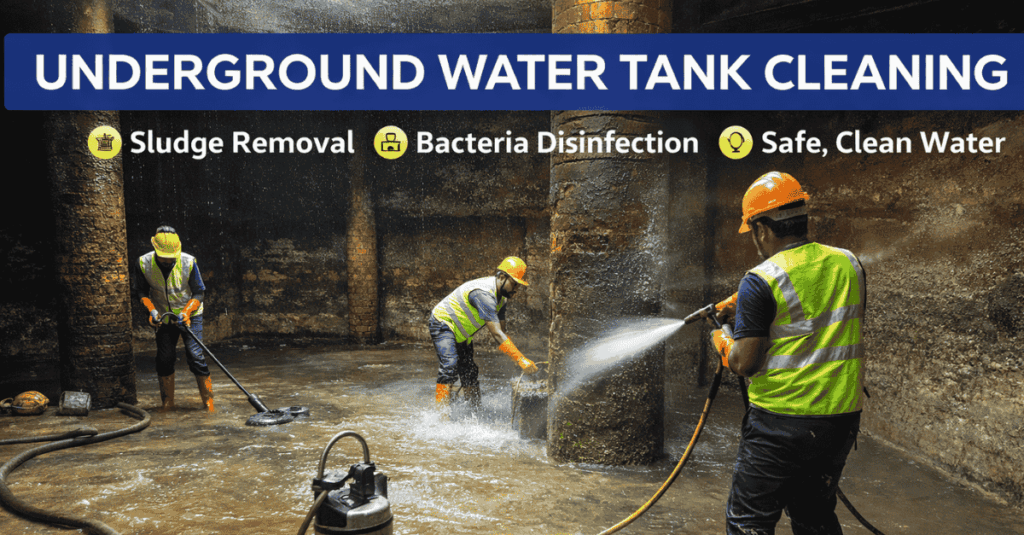
What is Underground Water Tank Cleaning?
Underground water tank cleaning is the professional process of removing sediment, algae, bacteria, fungus, and harmful contaminants from water storage tanks located below ground level.
Because these tanks are dark, moist, and poorly ventilated, they become ideal breeding grounds for:
- Bacteria & viruses
- Mosquito larvae
- Sludge & sediment
- Rust & biofilm
- Harmful microorganisms
Without regular cleaning, the water you drink, cook with, bathe in, and use every day can become dangerously contaminated. Further information Contact our Expert Team.
Why Underground Water Tank Cleaning is Extremely Important
Dirty underground tanks are directly linked to:
- Typhoid
- Cholera
- Diarrhea
- Skin infections
- Stomach disorders
- Bad odor & foul-tasting water
According to health experts, unclean water storage systems are one of the leading causes of waterborne diseases in urban India.
Regular underground water tank cleaning protects:
- Your family’s health
- Your building’s plumbing system
- The quality & taste of stored water
- Your long-term medical expenses
How Often Should Underground Water Tanks Be Cleaned?
| Usage Type | Recommended Frequency |
|---|---|
| Residential Homes | Every 6 months |
| Apartments & Societies | Every 3–4 months |
| Hospitals & Schools | Every 2–3 months |
| Commercial Buildings | Every 3 months |
| Hotels & Restaurants | Every 2 months |
Neglecting this schedule allows bacteria to multiply rapidly, especially during summer and monsoon seasons. You may check Municipal Water Safety Standards
Professional Underground Water Tank Cleaning Process
1. Complete Drainage
The tank is fully emptied using high-power pumps.
2. Sludge & Sediment Removal
Hard deposits, mud, and contaminants are scraped manually and vacuumed.
3. High-Pressure Jet Cleaning
Powerful jets remove algae and biofilm from walls and floor.
4. Disinfection
Food-grade disinfectants eliminate bacteria and pathogens.
5. Final Rinse & Inspection
The tank is flushed with clean water and inspected before refilling.
This process ensures your water is 100% safe for daily use.
Signs Your Underground Water Tank Needs Cleaning
- Foul smell from water
- Yellow or muddy water
- Slimy tank walls
- Frequent stomach illnesses
- Visible algae growth
- Insect presence inside tank
If you notice even one of these, immediate cleaning is required.
Cost of Underground Water Tank Cleaning
| Tank Capacity | Approximate Cost (INR) |
|---|---|
| 1000–2000 Liters | ₹800 – ₹1,200 |
| 3000–5000 Liters | ₹1,200 – ₹2,000 |
| 10,000+ Liters | ₹2,500 – ₹6,000 |
Cost varies based on location, tank condition, and service method.
Benefits of Regular Underground Water Tank Cleaning
- Pure, odor-free drinking water
- Stronger immunity & better health
- Improved plumbing lifespan
- No water contamination
- Prevention of mosquito breeding
- Compliance with health standards
HOW-TO Answers
How to Clean an Underground Water Tank (Step-by-Step Guide)
Question 1: How do professionals clean underground water tanks safely?
Answer:
Professionals begin by draining the tank completely using submersible pumps. Once empty, the interior is scrubbed manually to remove sludge, dirt, and hardened deposits. High-pressure jet cleaning is then used to clean all inner surfaces, ensuring removal of biofilm and algae.
After physical cleaning, food-grade disinfectants are applied to kill bacteria and viruses. The tank is finally rinsed thoroughly and inspected before refilling. This systematic process ensures 100% hygienic water storage.
Question 2: Can underground water tanks be cleaned without draining all water?
Answer:
Partial cleaning without draining may remove surface dirt but cannot eliminate settled sludge and bacterial colonies at the bottom. Complete drainage is essential for proper sanitation. Skipping this step leaves dangerous pathogens behind, making the cleaning ineffective.
Professional cleaning always involves full drainage to ensure thorough disinfection and water safety.
Question 3: What chemicals are used in underground water tank cleaning?
Answer:
Only food-grade, government-approved disinfectants are used. These chemicals kill bacteria, viruses, fungi, and parasites without leaving harmful residues.
Unlike household bleach, professional disinfectants are safe for drinking water storage systems and do not affect water taste or smell when used correctly.
Question 4: How long does underground water tank cleaning take?
Answer:
Cleaning time depends on tank size and contamination level. For residential tanks, the process typically takes 1–2 hours. Large commercial tanks may require 3–5 hours.
The result is months of safe, clean water with no health risks.
Question 5: Is underground water tank cleaning safe for concrete and plastic tanks?
Answer:
Yes. Professionals adjust pressure and tools based on tank material. Concrete, plastic, and steel tanks each receive specialized treatment that cleans effectively without causing surface damage.
FAQ (Frequently Asked Questions)
Frequently Asked Questions on Underground Water Tank Cleaning
Question 6: What happens if underground water tanks are not cleaned regularly?
Answer:
Without cleaning, harmful bacteria, viruses, algae, and sediments accumulate. This contaminated water enters daily usage, increasing risk of infections, digestive issues, and skin problems.
Long-term neglect can even corrode tank walls and plumbing systems, resulting in costly repairs.
Question 7: Is underground water tank cleaning mandatory by law?
Answer:
Many municipalities and health departments recommend mandatory tank cleaning every six months for residential buildings and more frequently for commercial premises.
Housing societies and commercial properties often face penalties if water quality tests fail.
Question 8: Can underground water tank cleaning improve water taste?
Answer:
Yes. Cleaning removes organic matter and bacterial growth that cause bad odor and unpleasant taste. After cleaning, water becomes fresh, odor-free, and safe for drinking.
Question 9: Does underground water tank cleaning prevent mosquito breeding?
Answer:
Absolutely. Stagnant water inside unclean tanks becomes a breeding ground for mosquitoes. Regular cleaning removes larvae and prevents disease outbreaks like dengue and malaria.
Question 10: Should apartments and societies schedule professional tank cleaning?
Answer:
Yes. Apartments store massive volumes of water used by many families. Regular professional underground water tank cleaning protects residents’ health and ensures regulatory compliance.
Why Professional Underground Water Tank Cleaning is Better Than DIY
DIY methods rarely remove deep-level contamination. Professionals use industrial equipment, safety gear, certified chemicals, and trained manpower to ensure full sanitation.
This guarantees long-term protection instead of short-term cosmetic cleaning.
Final Thoughts
Underground water tank cleaning is not optional — it is essential.
It protects your health, saves medical expenses, and ensures every drop of water your family uses is safe and pure.
If you want clean, safe water in your home or building, schedule professional underground water tank cleaning today and make hygiene a permanent habit. Call Now: 9901837838